

Celestia Ceramic Women’s Watch
$269

Your watch was keeping time perfectly yesterday.
Today, you look down and realize it has lost several minutes.
Before you start looking for a repair shop, take a breath.
A mechanical watch suddenly running slow does not always mean something is broken.
In many cases, the cause can be surprisingly simple: insufficient power, temperature changes, magnetism, or—only after those possibilities are ruled out—an aging movement that needs professional servicing.
So before you spend money on a repair, let's separate a normal mechanical-watch behavior from a problem that actually needs attention.
Mechanical watches are not expected to keep time with the same precision as a quartz watch.
A mechanical movement contains hundreds of tiny components, and its rate can be influenced by factors such as power level, position, temperature, and magnetism.
That means being a few seconds off doesn't automatically mean something is wrong.
The more important question is:
Has your watch suddenly changed its usual behavior?
If your watch has always gained or lost a small amount of time consistently, that may simply be part of its normal rate.
But if it was relatively stable and suddenly starts losing significantly more time than before, that's when you should investigate.
Before sending it for repair, check these four possibilities.

This is probably the first thing you should check.
An automatic mechanical watch stores energy in its mainspring. As you wear the watch, the rotor moves with your wrist and helps wind the movement.
When the stored power becomes low, the movement may not operate at the same rate as it does when adequately wound.
Eventually, if the power reserve runs out, the watch simply stops.
Wishdoit explains the same basic principle in its automatic-watch guide: the mainspring stores energy, which is gradually released through the gear train and escapement to keep the movement running.
If your automatic watch has been sitting on your desk for a day or two, don't immediately assume it has developed a fault.
It may simply have reached the end of its power reserve.
If your specific movement supports manual winding, gently wind the crown according to the manufacturer's instructions, then reset the time and observe the watch.
For example, many Wishdoit automatic mechanical watches are designed around longer power reserves, and the current mechanical collection specifically lists “Longer Power Reserve” as a feature across the collection.
Ask yourself:
Did I stop wearing the watch recently?
If the answer is yes, low power should be one of the first things you check.
Temperature is another factor that can influence mechanical-watch accuracy.
A mechanical movement is made from extremely small components. Changes in temperature can affect the behavior of materials inside the movement and, consequently, the rate of the watch.
That doesn't necessarily mean your watch is damaged.
For example, a watch exposed to a significant temperature change may behave slightly differently from when it is sitting comfortably at normal room temperature.
Don't immediately adjust the movement or send the watch for service.
Instead:
Move the watch away from the extreme temperature.
Let it return naturally to normal room temperature.
Reset the time.
Observe its accuracy over the next day or two.
If the watch returns to its previous behavior, temperature may have been contributing to the difference.
This is one reason serious watch owners don't judge mechanical accuracy based on a few minutes of observation.
Mechanical watches should be evaluated over time, not by a single glance at the dial.
Your watch doesn't need to touch a giant magnet to be exposed to magnetic fields.
Modern life is full of potential sources:
Smartphones
Laptop speakers
Headphones
Wireless speakers
Magnetic phone mounts
Magnetic bag clasps
Tablet covers
Other magnetic accessories
Magnetism can affect sensitive components in a mechanical movement, particularly the hairspring.
One common symptom is abnormal timekeeping.
If your watch suddenly begins behaving very differently from before—especially if it starts gaining or losing time noticeably—magnetism is worth considering.
Wishdoit also lists strong magnets among the things to avoid with automatic watches and notes that magnetism can affect the hairspring and cause abnormal timekeeping.
First, move the watch away from the suspected magnetic source.
Don't open the case yourself.
Don't try to “fix” the problem with another magnet.
If the watch continues to show abnormal accuracy, take it to a professional watchmaker for testing and, if necessary, demagnetization.
The good news is that magnetization does not automatically mean the movement is damaged.
Sometimes the problem is simply unwanted magnetism.

Now we get to the reason that deserves more attention.
If your watch:
Is fully wound
Has been kept at normal temperatures
Hasn't been exposed to obvious magnetism
Still consistently loses time
And has not been serviced for a long period
then it's reasonable to consider the condition of the movement itself.
Mechanical movements contain many points where components move against one another.
These areas rely on carefully applied lubricants to reduce friction and support smooth operation.
Over time, lubricants can deteriorate, migrate, or become less effective.
When that happens, friction inside the movement can increase.
And eventually, accuracy can suffer.
A watch that slows because it is nearly out of power may return to normal after being properly wound.
A watch that has an underlying servicing issue generally won't fix itself simply by winding it.
That's the difference.
If the problem is persistent, repeatable, and unrelated to power, temperature, or magnetism, professional inspection becomes much more reasonable.
Don't use “my watch lost a few minutes” as the only reason.
Instead, look for a pattern.
The watch stopped after not being worn
It returns to normal after winding
The time difference is small and consistent
The watch was recently exposed to unusual temperatures
You suspect magnetic exposure but haven't had it checked yet
The watch suddenly becomes significantly inaccurate
The problem continues after fully winding it
Accuracy remains abnormal after returning to normal temperature
Magnetism has been ruled out
The watch has not been serviced for a long time
You notice unusual noises, stopping, or other mechanical symptoms
The key is pattern rather than panic.
This is also why mechanical watches require a slightly different mindset.
A quartz watch uses an electronic oscillator regulated by a quartz crystal.
A mechanical watch relies on stored spring energy, gears, an escapement, and a balance wheel.
That mechanical complexity is exactly what makes automatic watches fascinating—but it also means their accuracy can respond to their environment and condition.
Wishdoit describes the balance wheel and hairspring as the regulating heart of a mechanical movement, while the mainspring provides the energy that keeps the system operating.
In other words:
A mechanical watch isn't simply “running.” It's continuously regulating energy through a miniature mechanical system.
That is part of the experience.
If you're choosing an automatic watch, don't look only at the dial.
Look at the entire package:
The movement determines how the watch stores and regulates energy.
A longer power reserve can be particularly useful if you rotate between several watches.
A well-designed case should feel intentional—not simply large for the sake of looking impressive.
A beautiful mechanical watch still needs to tell time clearly.
Crystal, case, strap, and finishing all affect the ownership experience.
This is ultimately why many people choose mechanical watches in the first place.
You're not just buying a way to tell time.
You're choosing something you want to wear.
If you're looking for a mechanical watch that combines movement, design, and everyday personality, Wishdoit's current collection covers several different directions—from GMT and skeleton watches to bold tonneau designs.
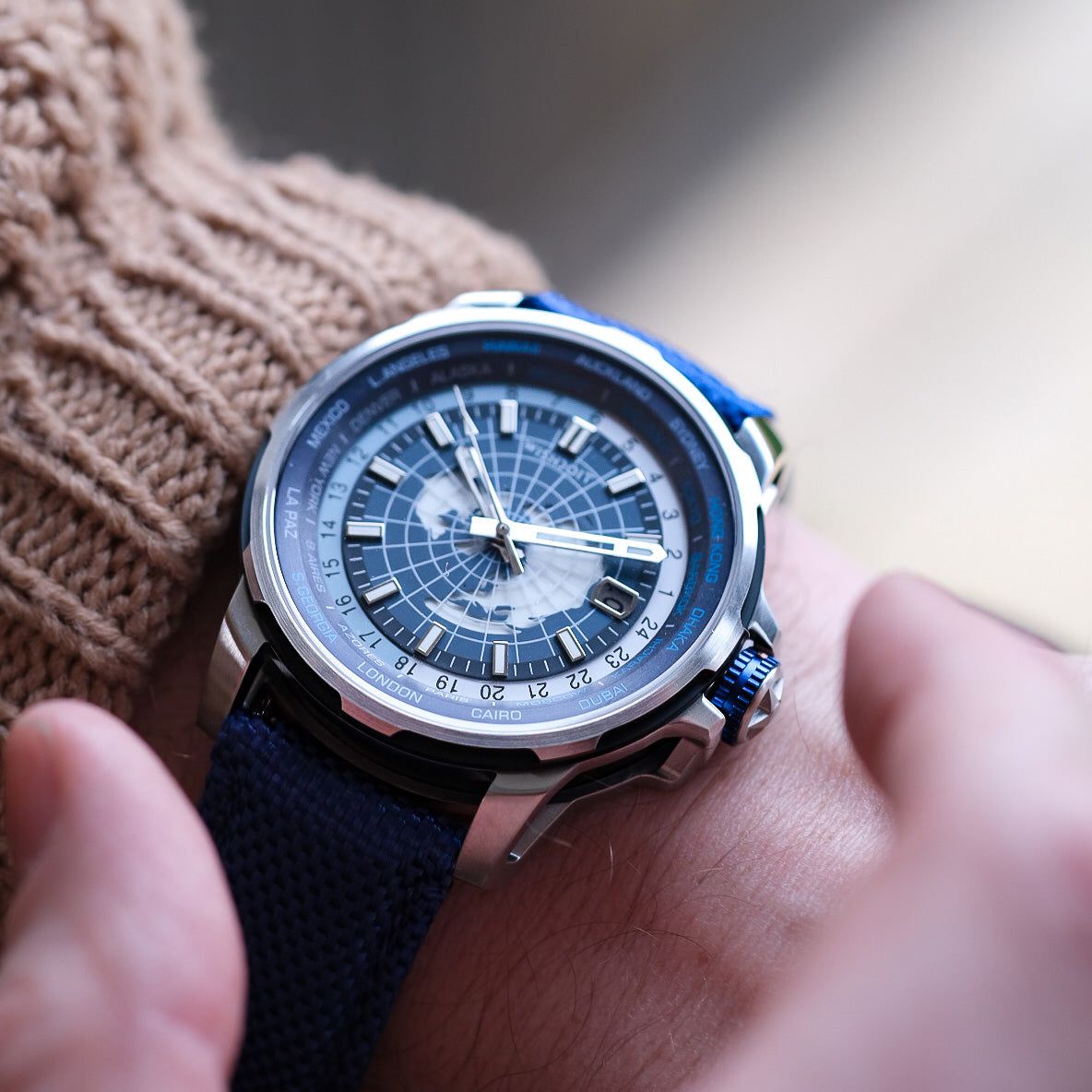
The ETERNAL EARTH GMT is designed for people who want more than a traditional three-hand display.
Its GMT functionality gives the watch a travel-oriented purpose, while the world-inspired dial makes it visually distinctive.
It is a natural choice if you appreciate mechanical watches with a functional complication rather than a purely decorative design.
The Aerial Prism takes a much more architectural approach.
Its skeleton construction puts the mechanical movement at the center of the design.
Instead of hiding the mechanism, the watch makes the movement part of the visual experience.
For someone who appreciates how a mechanical watch actually works, that makes the ownership experience much more engaging.
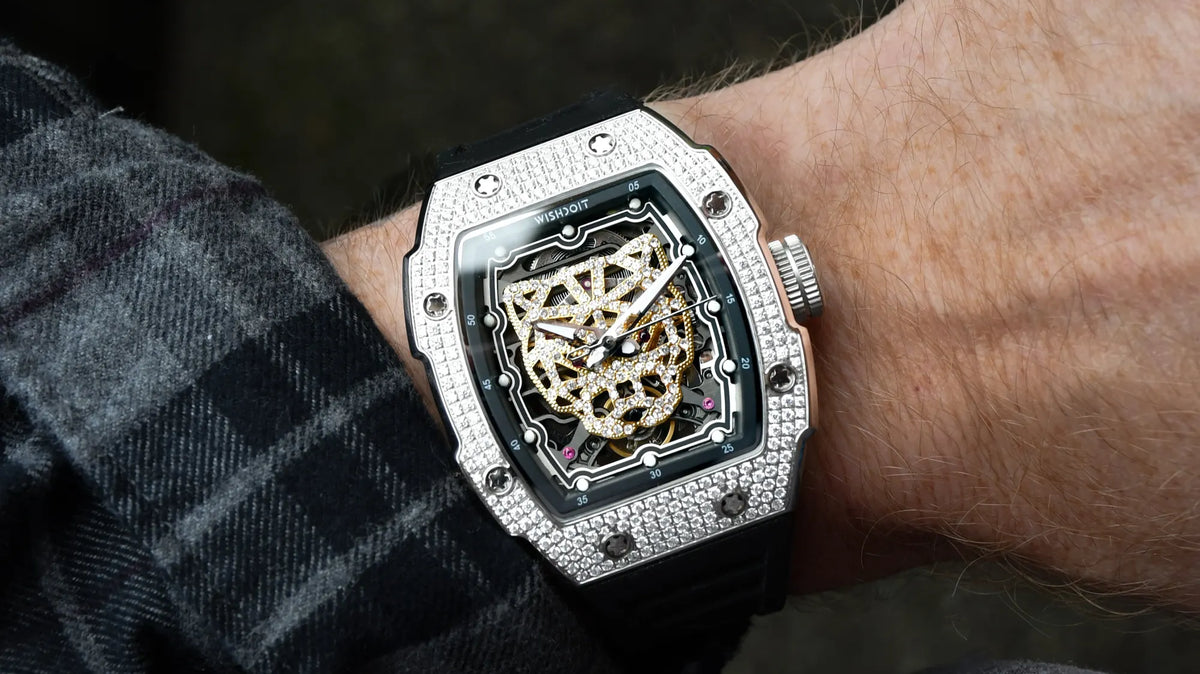
The Full Speed Tonneau Skeleton combines an automatic movement with a distinctive tonneau-shaped case and open-work dial.
It has a stronger contemporary character than a traditional round dress watch while keeping the mechanical movement visible.
If your priority is dial design, the GLACIER Starry Sky Automatic offers another interpretation of the mechanical-watch experience.
The starry-sky-inspired dial creates a more expressive look while the automatic movement keeps the mechanical character beneath it.
These models represent different reasons to choose an automatic watch: travel functionality, visible mechanics, distinctive case architecture, or expressive dial design.
Your mechanical watch suddenly seems slow?
Don't panic.
Ask yourself these four questions:
1. Does it have enough power?
If not, wind it properly and observe.
2. Has it experienced a significant temperature change?
Let it return to normal room temperature.
3. Could it have been exposed to magnetism?
Move it away from magnetic sources and consider professional testing.
4. Does the problem continue?
If yes—and especially if the watch has not been serviced for a long time—professional inspection may be appropriate.
This simple checklist can help you distinguish a temporary change from a genuine servicing issue.
A mechanical watch suddenly running slow can be frustrating.
But don't assume the worst.
Low power, temperature, magnetism, and movement condition can all affect mechanical timekeeping.
The smartest approach is to eliminate the simple possibilities first.
If winding solves the problem, you probably didn't need a repair.
If returning to normal temperature helps, you may have found the cause.
If magnetism is responsible, professional demagnetization may be all that's needed.
And if the watch continues to lose time despite everything else being ruled out, that's when a proper service becomes worth considering.
Because owning a mechanical watch isn't just about wearing it.
It's about understanding the little mechanical system working underneath the dial—and knowing when it needs attention and when it simply needs a little more time.
Why Tonneau Skeleton Watches Stand Out: A Closer Look at Aerial Prism
Waiting for a Breakdown? Why Regular Watch Inspections Save You Time and Money
Precision vs Craftsmanship: A Comprehensive Comparison of Quartz and Mechanical Watches