

Celestia Ceramic Women’s Watch
$269

Your mechanical watch was keeping good time yesterday.
Today, it's suddenly running several minutes fast.
You reset it. A few hours later, it's fast again.
Before you assume the movement is broken, there is one surprisingly common possibility:
Your watch may be magnetized.
Modern life puts watches closer to magnetic fields than most people realize. Smartphones, laptop speakers, headphones, magnetic bag clasps, tablet covers, electric razors, and other everyday devices can all expose a watch to magnetic fields.
For a mechanical watch, the problem isn't necessarily visible damage.
Sometimes, the biggest clue is simply that your watch suddenly stops keeping time the way it used to.
A mechanical watch relies on hundreds of tiny components working together.
Among the most important is the hairspring, which works with the balance wheel to regulate the movement's rate.
When sensitive metal components become magnetized, parts of the hairspring can be affected and the balance may no longer oscillate normally.
The result?
Your watch may:
Start running unusually fast
Start losing time
Show inconsistent accuracy
In more serious cases, stop running properly
This is why magnetization can be confusing.
The watch may look completely normal on the outside.
There may be no scratches, no broken hands, and no visible damage to the dial.
But its accuracy can suddenly change.

This is one of the biggest clues.
If your mechanical watch has been relatively stable and then suddenly begins gaining a significant amount of time, magnetization is one possible cause worth checking.
However, it is important not to assume magnetization is always the answer.
Mechanical watch accuracy can also be influenced by winding condition, temperature, position, shock, and other factors.
So think of sudden timing changes as a reason to investigate, not an automatic diagnosis.
You don't need to own a powerful industrial magnet to encounter magnetic fields.
Common everyday sources include:
Your phone contains speakers and other components that can generate magnetic fields.
Keeping a mechanical watch directly against a phone for long periods isn't a good storage habit.
Working at a desk with your watch next to a laptop may seem completely harmless.
But repeated close exposure to magnetic sources is worth avoiding.
Wireless headphones, headphones with magnetic components, and larger speakers can all be potential sources of magnetic fields.
This is an easy one to overlook.
If you put your watch inside a handbag or backpack with a magnetic closure, the watch may end up sitting very close to the magnetic clasp.
Magnetic phone cases, jewelry, tablet covers, charging accessories, and other magnetic products can also create unnecessary exposure.
The general principle is simple:
Don't store your mechanical watch directly next to a magnetic object.
Major watch manufacturers recommend keeping mechanical watches away from magnetic fields, with Seiko specifically noting that keeping a watch more than 5 cm away from magnetic products weakens the influence of magnetism.
If you suspect your watch has become magnetized, don't start opening the case.
And don't try to “fix” it with another magnet.
A mechanical watch is a precision instrument. Opening the case without the appropriate tools and experience can introduce dust, damage seals, or create another problem that didn't exist before.
The safest first step is much simpler:
Move the watch away from the suspected magnetic source.
Then observe its timekeeping.
If the accuracy remains abnormal, professional demagnetization is the appropriate next step.

Yes.
Watchmakers can use a dedicated demagnetizing device to remove residual magnetism from affected components.
The process is generally much simpler than repairing a damaged movement.
But there is an important distinction:
Demagnetization is not the same thing as movement regulation.
If your watch was magnetized, removing the magnetism may restore normal operation.
If the watch remains significantly inaccurate afterward, the movement may need further inspection or regulation.
Seiko's guidance similarly recommends demagnetization when a mechanical watch has been affected by magnetism and its accuracy does not recover.
You may have seen the advice:
“Put a compass next to your watch. If the needle moves, the watch is magnetized.”
A compass can sometimes provide a rough indication that a magnetic field is present, but it isn't a substitute for proper watch testing.
If your watch is suddenly gaining or losing time, a professional check is more useful than relying entirely on a DIY test.
In other words:
Use symptoms as a clue, not as a final diagnosis.
This is perhaps the most important thing to understand.
A magnetized mechanical watch is not necessarily a failed mechanical watch.
Magnetism is an environmental factor that can interfere with the operation of sensitive movement components.
In many cases, the solution is simply to remove the magnetic influence and, if necessary, have the movement professionally demagnetized.
That's very different from a broken gear, damaged balance, or worn-out movement.
You don't need to live like a watchmaker to protect a mechanical watch.
A few simple habits can make a difference.
It's convenient, but unnecessary.
Give your watch its own storage space.
Don't place your watch directly beside large speakers or other strong magnetic sources when you're not wearing it.
Before putting your watch into a bag, check whether the bag uses a magnetic clasp.
Your nightstand may contain a phone, tablet, wireless headphones, and charging accessories.
Your watch doesn't need to sleep next to all of them.
Don't immediately adjust the time every few hours and assume that's normal.
If your watch suddenly behaves differently from before, find out why.
That is especially important with a mechanical watch because its accuracy can tell you something about what is happening inside the movement.
Not exactly.
Different watch movements respond differently to magnetic fields.
Mechanical watches can remain magnetized even after being removed from the magnetic source, which is why demagnetization may be necessary.
Analog quartz watches can also be affected by strong magnetic fields because their step motors rely on magnetic forces, although the symptoms and recovery process differ.
For this reason, the advice “just move the watch away from the magnet” isn't universally applicable to every type of watch.
Know what movement is inside your watch before trying to diagnose the problem.
A mechanical watch asks you to pay attention to things that a simple battery-powered watch doesn't.
Power reserve.
Winding.
Position.
Temperature.
Magnetism.
And that's part of the appeal.
The movement isn't just a hidden battery-powered module. It is a mechanical system containing numerous tiny components working together to measure time.
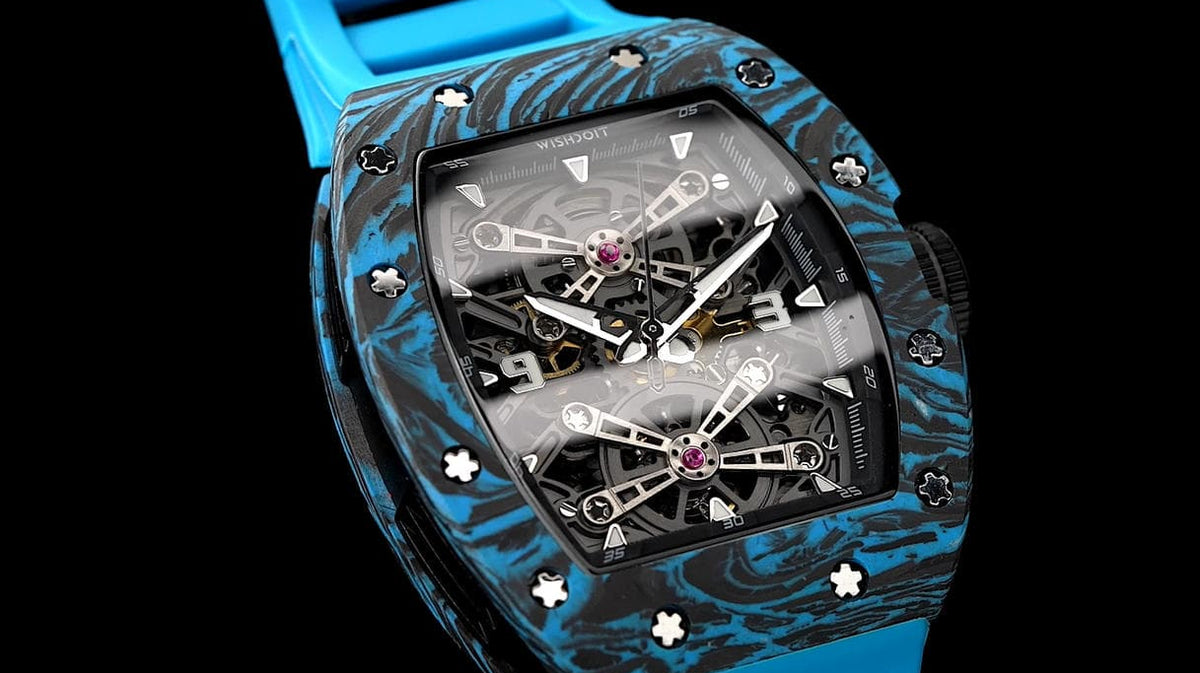
Wishdoit's current mechanical collection includes automatic watches, skeleton designs, GMT watches, tonneau cases, and other mechanical styles. The collection includes models such as ETERNAL EARTH GMT, Aerial Prism, THE PIONEER, Full Speed, GLACIER Starry Sky, THE ARISTOS, and Captain Kidd designs.
If you're interested in mechanical watches, magnetism is just one part of the ownership experience.
The other part is choosing a watch whose design, movement, and functionality fit the way you actually wear it.
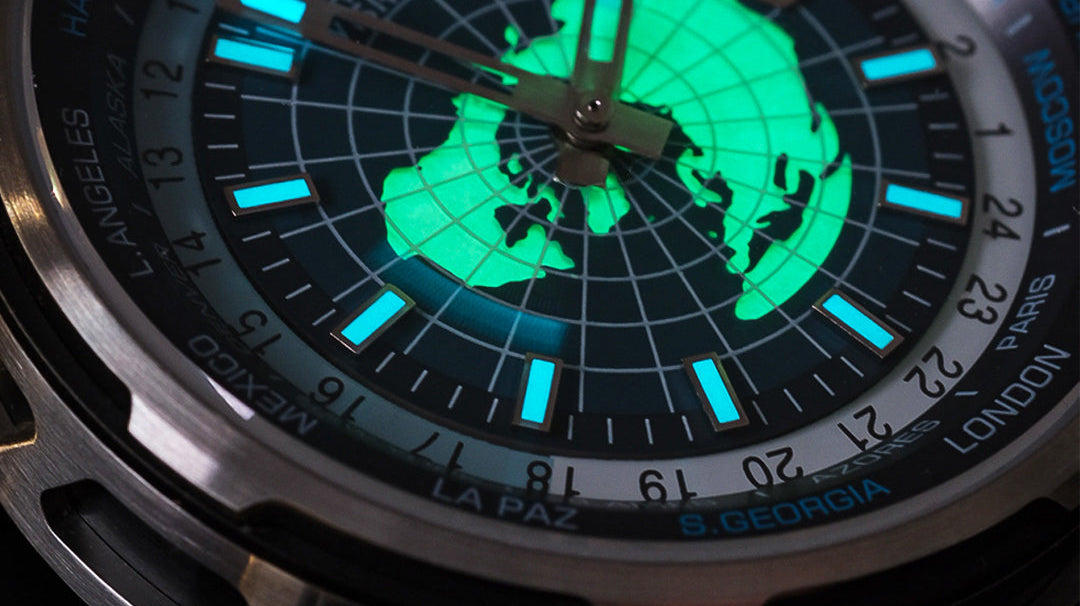
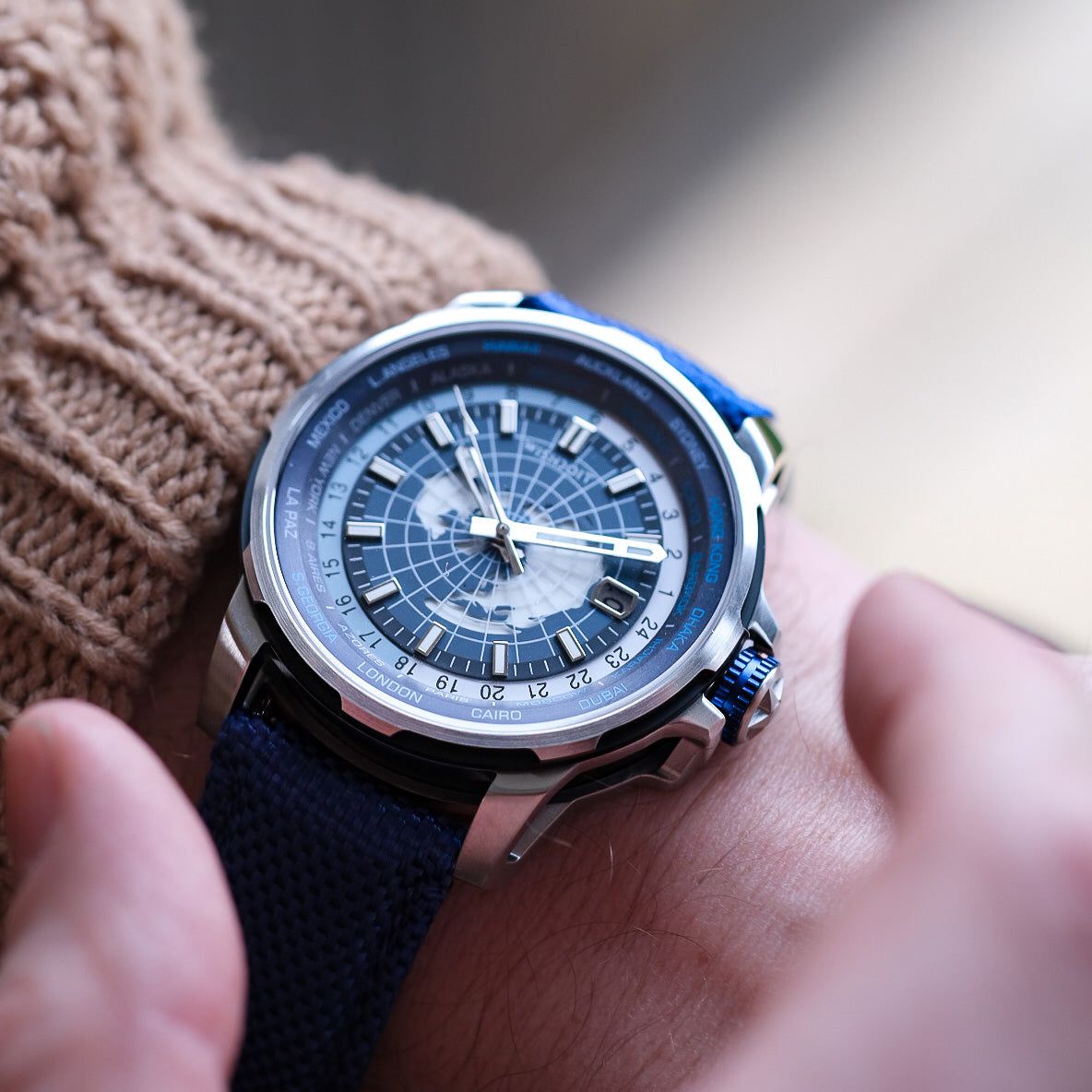
The ETERNAL EARTH GMT combines an automatic mechanical movement with a world-map-inspired dial and GMT functionality.
It is designed for people who want more than a simple three-hand display—a mechanical watch with a visual story and a practical travel function.
The Aerial Prism takes the opposite approach.
Instead of hiding the movement, its skeleton design puts the mechanical structure at the center of the watch.
If you enjoy seeing the movement working beneath the dial, this is the kind of detail that makes mechanical watches feel less like accessories and more like miniature machines.
The Full Speed Tonneau Skeleton combines a distinctive tonneau case with an automatic skeleton movement.
Its bold case shape and exposed mechanical architecture give it a very different personality from a traditional round mechanical watch.
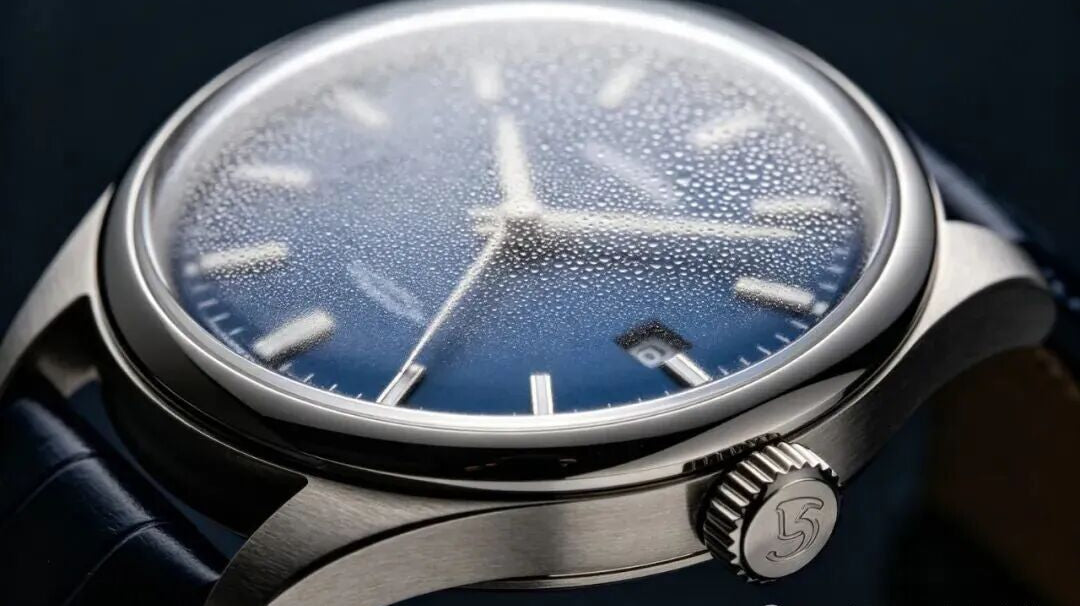
For those who prefer a more visually expressive dial, the GLACIER Starry Sky Automatic combines automatic mechanical functionality with a dramatic starry-sky-inspired appearance.
It demonstrates another reason people choose mechanical watches:
The movement matters—but so does everything built around it.
Mechanical watches are precise machines, but they're still machines.
They respond to their environment.
If your watch suddenly starts running unusually fast or slow, don't panic—and don't immediately start adjusting everything yourself.
First ask:
Could magnetism be the reason?
Move it away from potential magnetic sources.
Observe the accuracy.
And if the problem continues, have the watch professionally checked and demagnetized if necessary.
That simple approach can save you from turning a manageable issue into a much bigger one.
A mechanical watch suddenly running fast doesn't always mean the movement is broken.
Magnetism is an easy-to-overlook cause of abnormal timekeeping, especially in a world filled with smartphones, headphones, speakers, magnetic accessories, and other electronic devices.
The good news?
Magnetization is often manageable.
The key is recognizing the symptoms, avoiding unnecessary DIY repairs, and getting professional help when the accuracy doesn't return to normal.
And perhaps that's one of the reasons mechanical watches remain fascinating.
Inside a case small enough to wear every day is an intricate mechanical system—one that rewards you for understanding how it works.
Choose the design you love.
Learn how to care for the movement.
And give your mechanical watch the environment it deserves.
You'll also like:
Sapphire Crystal vs. Mineral Glass: What's the Difference and Which Watch Crystal Is Better?
Waiting for a Breakdown? Why Regular Watch Inspections Save You Time and Money
Watch Crown Care 101: Protect Your Watch’s Tiny but Mighty Control Center