


Celestia Ceramic Women’s Watch
$269

A watch does more than tell you the time. For many watch enthusiasts, one of the most satisfying details is watching the date change precisely at midnight.
But have you ever wondered how a mechanical watch knows when to move from the 30th to the 1st? Or why February creates a special challenge for traditional calendar mechanisms?
Unlike hours and minutes, the calendar does not follow a perfectly regular cycle. Some months have 31 days, others have 30, and February has only 28 days in a common year or 29 in a leap year.
This seemingly simple difference creates an interesting challenge for watchmakers.
In this guide, WishDoit explores how watch calendar mechanisms work, why February is particularly demanding, and what makes different calendar complications unique.
A calendar watch is a timepiece equipped with a mechanism that displays additional calendar information, most commonly the date and sometimes the day of the week or month.
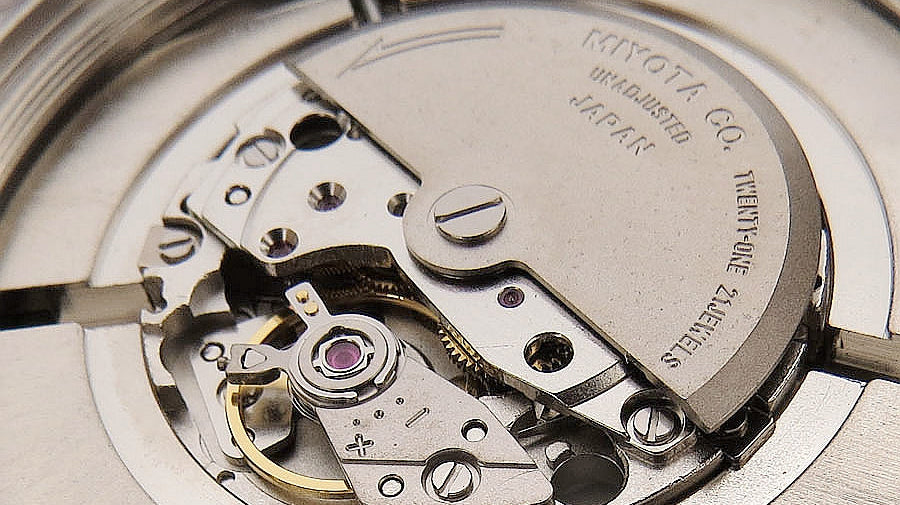
In a traditional mechanical watch, the calendar function works through a series of gears, wheels, and levers connected to the movement.
As the hands approach midnight, the calendar mechanism gradually prepares to advance the date. At the appropriate moment, a driving component activates the date wheel, moving the display forward by one day.
Most traditional date mechanisms use a date wheel with 31 positions, representing the maximum number of days in a month.
This design works well for months with 31 days. However, it creates a small inconvenience when the month has fewer days.
For example:
April has 30 days, so the date must be corrected after April 30.
June has 30 days, requiring another adjustment.
September and November also have 30 days.
February requires a correction after either the 28th or 29th.
This is why a standard mechanical date watch usually needs manual adjustment several times throughout the year.
The mechanism itself is relatively straightforward, but it demonstrates how even a small display can involve carefully coordinated mechanical components.
February is the shortest month of the year, making it particularly interesting from a watchmaking perspective.
Unlike other months, February does not always have the same number of days.
In a common year, February has 28 days. During a leap year, it has 29.
A standard date mechanism does not automatically recognize this difference. It simply follows its 31-day cycle.
As a result, if you own a traditional watch with a date display, you will need to correct it at the end of February.
A leap year occurs every four years in most cases, adding an extra day to February.
For example:
Common year: February 28 → March 1
Leap year: February 28 → February 29 → March 1
This extra day helps keep the calendar aligned with Earth's orbit around the Sun.
For a traditional date watch, the wearer must manually correct the display after February ends, regardless of whether the month has 28 or 29 days.
For more advanced calendar mechanisms, however, February presents a much more interesting engineering challenge.

Not all calendar watches work in the same way. Depending on their mechanical complexity, they can offer very different levels of convenience.
This is one of the most common calendar functions found in everyday watches.
A small window on the dial displays the current date, usually as a number from 1 to 31.
The date advances automatically at midnight, but the mechanism does not independently recognize months with fewer than 31 days.
Therefore, the wearer needs to adjust the date manually after shorter months.
Why people like it:
Easy to read.
Simple and practical.
Requires relatively straightforward mechanical construction.
Suitable for everyday use.
For many watch owners, a standard date display provides everything they need without unnecessary complexity.
An annual calendar is a more advanced complication.
Unlike a standard date mechanism, it can distinguish between months with 30 and 31 days.
This means it automatically adjusts the date at the end of most months.
However, February remains the exception because its length changes depending on whether it is a common year or a leap year.
An annual calendar generally requires one manual correction at the end of February each year.
Why it is interesting:
Automatically handles 30-day and 31-day months.
Requires less frequent adjustment than a standard date mechanism.
Demonstrates a more sophisticated calendar system.
The perpetual calendar is one of the most impressive calendar complications in mechanical watchmaking.
It is designed to recognize the different lengths of all 12 months, including February and its leap-year cycle.
A properly functioning perpetual calendar can automatically distinguish between:
February 28 in a common year.
February 29 in a leap year.
Months with 30 days.
Months with 31 days.
Its internal mechanism uses carefully designed cams, gears, and other components to store and interpret calendar information.
Most perpetual calendars follow the Gregorian leap-year rules and will need a correction in 2100 because that year is not a leap year.
It is an extraordinary example of how mechanical engineering can reproduce the logic of a calendar.
An important distinction: A perpetual calendar is not simply a regular watch with a date window. It is a highly specialized complication requiring additional mechanical components and engineering.
The ingenuity of a perpetual calendar lies in its ability to remember information beyond the current date.
A standard date mechanism only needs to advance one number at a time. A perpetual calendar must also understand the relationship between months and leap years.
One important component used in many perpetual calendar designs is a specially shaped program wheel or cam.
This component stores information about the calendar cycle.
As the mechanism advances, small levers or feelers interact with the cam to determine how many days the current month contains.
The mechanism then controls the date display accordingly.
For example, at the end of a 30-day month, it can skip the 31st and move directly to the 1st.
At the end of February, it uses additional calendar information to determine whether the next date should be March 1 or February 29.
The four-year leap-year cycle adds another layer of complexity.
This is why perpetual calendar watches are considered remarkable achievements in mechanical watchmaking. Their complexity is not simply about adding more displays to the dial. It is about creating a mechanical system capable of following the irregular structure of our calendar.

Even a relatively simple date mechanism deserves proper care.
If your watch has a calendar function, a few basic habits can help prevent unnecessary problems.
Many mechanical movements begin engaging their calendar mechanism during the late evening and continue through the early morning.
Using the quick-set date function during this period may interfere with the mechanism and potentially cause damage.
The exact restricted period depends on the movement, so always consult your watch's manual.
When in doubt, move the hands to approximately 6:30 before adjusting the date, provided your movement's instructions allow this procedure.
If your watch displays the wrong date at noon instead of midnight, the hands may be set to the wrong 12-hour cycle.
Move the hands forward through a complete 24-hour cycle to identify the correct date-change point.
If the crown feels unusually tight or the date does not advance smoothly, stop adjusting it.
Forcing the crown may damage delicate internal components.
An automatic watch needs sufficient stored energy to keep running.
If your watch stops, follow the manufacturer's winding and setting instructions before correcting the date and time.
At WishDoit, we believe that a good watch should bring together practical functionality and distinctive design.
While advanced calendar complications such as annual and perpetual calendars represent fascinating achievements in traditional watchmaking, not every watch needs such a complicated mechanism to be useful.
A straightforward date display can provide the everyday convenience most people actually need.
Whether you prefer the mechanical character of a skeleton dial, the travel-friendly functionality of a GMT watch, or the sporty appearance of a chronograph, the right timepiece depends on how you use it and what you appreciate.
WishDoit focuses on distinctive watch designs that combine visual character with practical everyday features.
Our collections offer different ways to express your personality without making unnecessary complexity the center of the experience.
If you appreciate watches that balance design and functionality, explore the WishDoit Watch Collection and discover a timepiece that suits your lifestyle.
The calendar function on a watch may look simple, but its mechanical operation reveals an interesting side of watchmaking.
A standard date display relies on a relatively straightforward 31-day cycle. Annual calendars introduce additional mechanical intelligence to recognize shorter months, while perpetual calendars take the concept further by accounting for leap years.
And February remains the ultimate test of these mechanisms because it reminds us that time does not always follow a simple, repeating pattern.
At WishDoit, we appreciate the engineering behind every watch function, whether it is a simple date display or a more sophisticated mechanical complication.
After all, great watchmaking is not only about measuring time. It is about finding thoughtful ways to make every second meaningful.
You'll also like:
Watch Water Resistance Explained: What Does 5 ATM Really Mean?
Why Does Watch Lume Fade So Fast? Your Watch Probably Isn't Broken
Why Tonneau Skeleton Watches Stand Out: A Closer Look at Aerial Prism