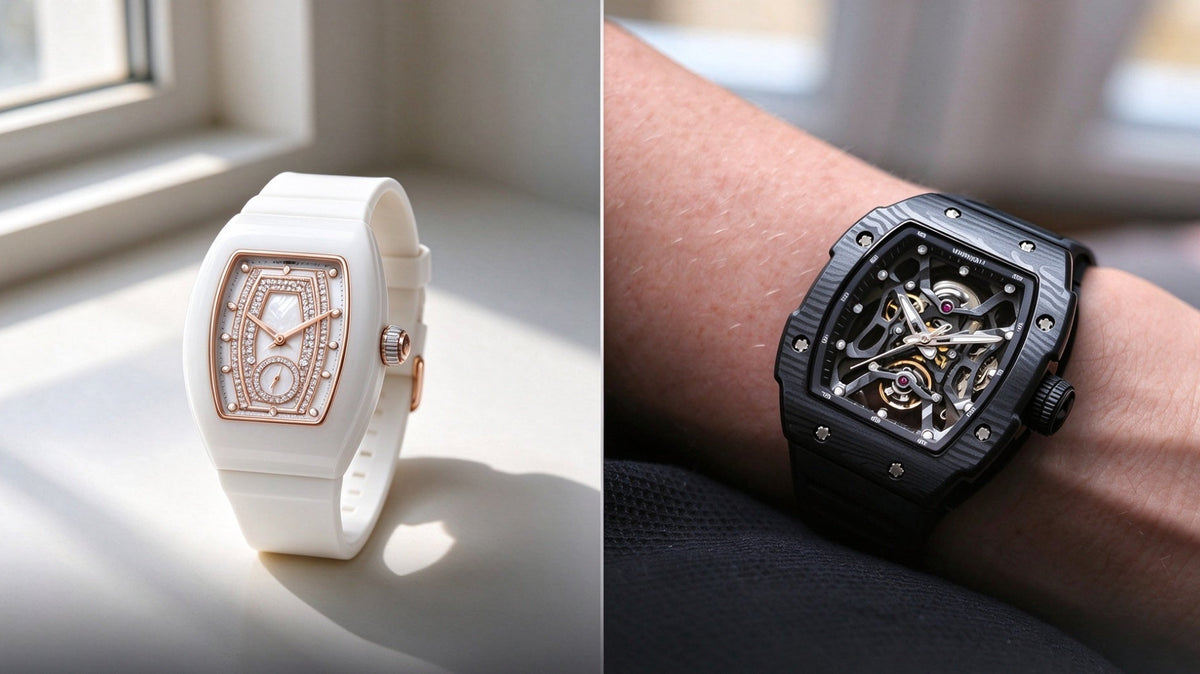


Celestia Ceramic Women’s Watch
$269

You check your watch at night. The hands were glowing brightly earlier, but now the lume looks much weaker—or seems to have disappeared completely.
Before you assume something is wrong with your watch, there is something important to know:
Watch lume is not designed to glow at the same brightness all night.
In most cases, fading lume is completely normal. The real question is how lume works, how long it should last, and why some watches appear much brighter than others.
Watch lume is a luminous material applied to parts of a watch that need to remain visible in low-light conditions, most commonly the hands and hour markers.
Unlike an LED or an electronic backlight, traditional watch lume does not produce light continuously. It first needs to absorb light energy. Once you move into a darker environment, that stored energy is released gradually as visible light.
This is why you may notice your watch glowing strongly immediately after coming indoors from daylight, but looking much weaker several minutes later.
Wishdoit's own FAQ notes that most of its watches have luminous material on the hour and minute hands, while certain models use stronger Swiss Lume technology.

There are three simple reasons.
Lume needs exposure to light before it can glow.
If your watch spends most of the day underneath a shirt sleeve, inside a drawer, or away from strong light, there may not be enough stored energy for a strong glow.
This is why two watches can appear completely different at night even when both have luminous hands.
Even after absorbing enough light, lume does not maintain maximum brightness indefinitely.
The brightness is strongest shortly after activation and gradually decreases as the stored energy is released.
Wishdoit product FAQs similarly explain that luminous performance depends on light exposure and environmental conditions, with the glow gradually becoming weaker in darkness.
So if your watch is bright at first and becomes softer later, that does not automatically mean the lume is defective.
Not every luminous watch is designed for the same level of visibility.
Some watches use small luminous sections on the hands. Others place lume on hands, hour markers, or larger parts of the dial.
The design also matters. A watch with larger luminous markers can appear much easier to read in darkness than one with only small luminous details.
That's why “Does this watch have lume?” isn't always the most useful question.
A better question is:
Where is the lume, and how is it designed to be used?
There is no single number that applies to every luminous watch.
Brightness depends on:
How much light the watch absorbed
The type of luminous material
How much luminous material is used
Where the lume is positioned
The surrounding environment
How much time has passed since the watch was exposed to light
For example, Wishdoit's FAQ explains that its stronger Swiss Lume technology can provide a more noticeable luminous effect, while its standard watches generally use smaller luminous sections.
So don't judge a watch's lume only by looking at it several hours after charging.

Check it shortly after exposure to light, then watch how the brightness changes.
Yes.
The stronger and more direct the light exposure, the more energy the luminous material can generally absorb.
If your watch has been sitting under a desk or beneath your sleeve all day, expecting an intense glow at night is unrealistic.
For a simple test, expose the watch to a bright light source, then move into a dark room and observe the hands and markers.
This gives you a much better idea of how the lume actually performs.
And remember: more charging does not mean the lume will stay at maximum brightness indefinitely.
The glow will still gradually fade.
This is one of the most common misunderstandings.
You look at your watch in a dark room and see almost nothing.
Then you walk past a window, expose the watch to light for a while, and suddenly the hands glow again.
That's a strong indication that the lume itself is functioning normally.
Before assuming there is a problem, try this:
Step 1: Expose the watch to sufficient light.
Step 2: Move into a darker environment.
Step 3: Check the luminous hands and markers immediately.
Step 4: Observe how the brightness changes over time.
If the lume appears after charging and gradually fades, that is generally how luminous material is expected to behave.
Lume doesn't have to be the main reason you choose a watch. But when it is thoughtfully integrated into the design, it adds another layer to the wearing experience.
Wishdoit's current collection includes luminous GMT, mechanical, skeleton, tonneau, chronograph, and women's watches, giving different styles of watch wearer different ways to enjoy this detail.
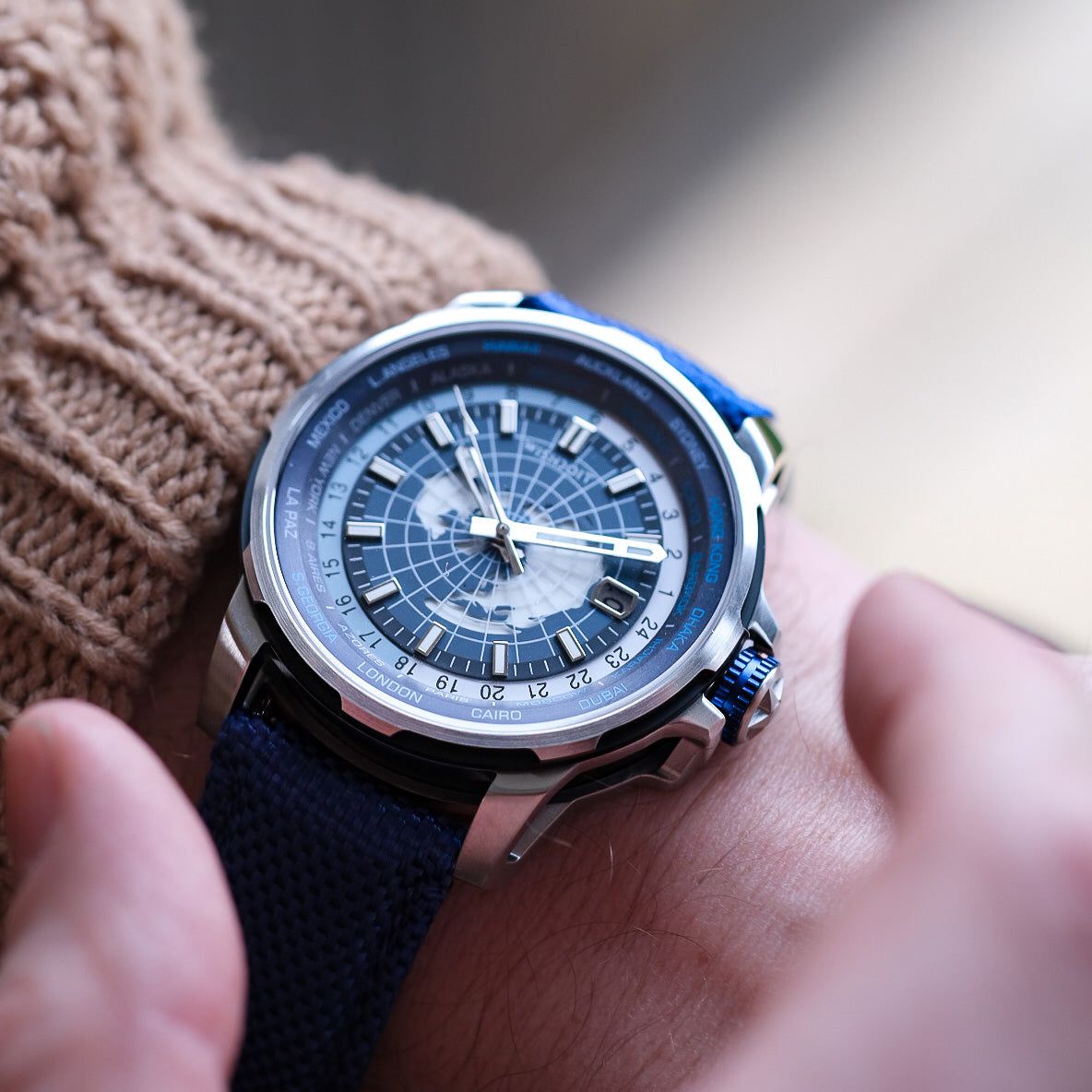
The ETERNAL EARTH GMT Mechanical Watch combines a world-time-inspired dial with a luminous display.
Its raised markers and hands use BGW-9 luminous material, while the dial incorporates a luminous map detail. That makes the lume part of the watch's travel-focused identity rather than simply an afterthought.
The result is especially interesting if you like watches that combine function, storytelling, and mechanical character.
The Aerial Prism Mechanical Skeleton Watch takes a completely different approach.
Its skeletonized architecture exposes the mechanical character of the watch, while luminous hands provide visibility in darker environments.
During the day, the attraction is the open mechanical design.
At night, the luminous hands become a much simpler visual focal point.
That contrast is part of what makes skeleton watches interesting: the watch can look completely different depending on the light.
The Full Speed Tonneau Skeleton combines an oversized tonneau silhouette with a skeleton design and luminous dial elements.
Wishdoit specifically lists the model as having a luminous dial for reading the time in low-light conditions.
It is a good example of how lume doesn't need to dominate the dial to be useful.
During the day, the tonneau case and mechanical structure create the visual impact.
After dark, the luminous elements take over part of the experience.
Lume isn't only for sporty-looking watches.
The Celestia Ceramic Women's Watch uses luminous hands while maintaining its smaller 31mm tonneau case, ceramic construction, and elegant dial design.
This is a useful reminder that luminous functionality can be incorporated into a more refined women's watch without turning the entire design into a technical-looking timepiece.
The Peacock Plume Women's Watch combines a 31mm tonneau case, ceramic construction, a 3D peacock-inspired dial, and luminous functionality.
Here, the appeal is less about creating an aggressively bright night-time display and more about adding practical visibility to a highly decorative design.
It is the kind of detail you may barely notice during the day—but appreciate when the environment gets darker.
The RACING GT 2.0 Chronograph Watch takes the lume concept into a sportier direction.
With its tonneau case, racing-inspired dial and chronograph design, the watch is visually busy compared with a minimalist timepiece. Luminous elements help maintain basic readability when ambient light drops.
It is a good example of something important:
Lume is not only about brightness. It is also about readability.
Not necessarily.
A watch is more than its lume.
When choosing a watch, consider the entire combination:
Case design
Crystal
Movement
Dial readability
Materials
Size and wrist comfort
Water resistance
Strap or bracelet
Luminous performance
Lume is one feature within that larger picture.
A beautifully designed dress-oriented watch doesn't necessarily need the same luminous treatment as a technical sports watch. Likewise, a skeleton watch may use lume differently from a GMT.
The better question isn't:
“Which watch has the most lume?”
It is:
“Does the lume make sense for the way I want to wear the watch?”
Want your watch to look brighter at night?
Try these simple habits:
Give it enough light.
Natural daylight or a strong light source can help charge the luminous material.
Check it soon after charging.
The strongest glow normally appears shortly after exposure.
Don't expect constant brightness.
Lume naturally becomes less intense as time passes.
Keep the dial clean.
Dust, fingerprints, or dirt can affect how clearly you see the dial, especially in low light.
Consider the design.
Larger luminous hands and markers can make a bigger difference to readability than simply having “lume” listed in the specifications.
So, why does watch lume fade?
Because that's what luminous material is supposed to do.
It absorbs energy from light and gradually releases that energy in darkness. The brightest part of the glow is temporary, and the intensity naturally decreases.
That means a watch that is bright immediately after charging but much dimmer later isn't necessarily broken.
In many cases, it is simply doing exactly what it was designed to do.
The best watch details aren't always the ones you notice immediately.
A textured dial catches light during the day.
A skeleton movement reveals its mechanics.
A GMT hand helps you track another time zone.
And lume quietly waits for darkness.
That is part of the appeal of a well-designed watch: the experience changes with your surroundings.
From the travel-focused ETERNAL EARTH GMT to the architectural Aerial Prism, the Full Speed skeleton, and the more refined Celestia and Peacock Plume, Wishdoit's collection shows that luminous details can work across very different watch styles.
You don't need the brightest lume to appreciate it.
You just need a watch where the detail makes sense.
If your watch lume becomes dim after several minutes or hours, don't immediately assume something is wrong.
First, give it enough light.
Then check how it behaves in darkness.
Lume is designed to fade—not to stay at maximum brightness all night.
And when it is thoughtfully combined with the right dial, case, and movement, it becomes more than a technical feature.
It becomes one of those small details that makes a watch more interesting every time you wear it.
You'll also like:
Why Tonneau Skeleton Watches Stand Out: A Closer Look at Aerial Prism
What Makes a GMT Automatic Watch Perfect for Modern Travelers?
What Makes a Peacock-Inspired Watch So Unique?