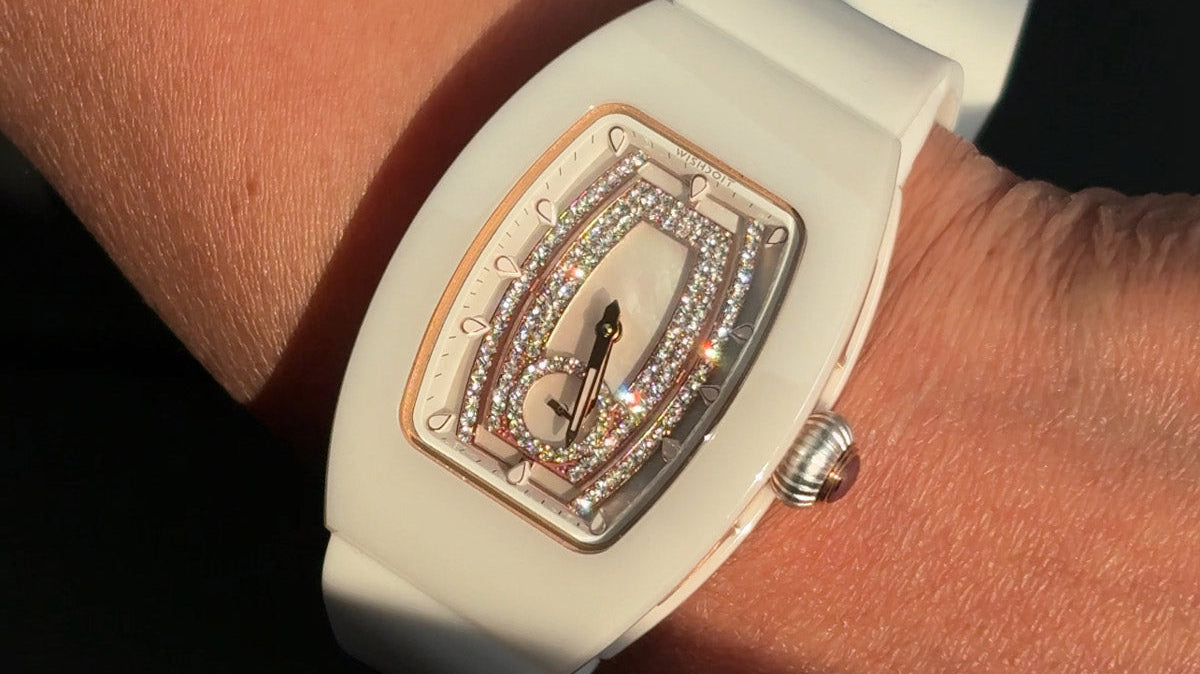


Celestia Ceramic Women’s Watch
$269

Your quartz watch has stopped ticking. The hands no longer move, and your first thought is that something inside has broken.
Before assuming the worst, check the battery.
A depleted battery is one of the most common reasons a quartz watch stops working. Replacing it may be straightforward, but opening a watch without the right tools or technique can scratch the case, damage the movement, or compromise its water resistance.
In this guide, we'll explain how to replace a watch battery step by step, what tools you'll need, and when it's better to leave the job to a professional.
Before opening your watch, make sure the battery is actually the problem.
Common signs of a depleted battery include:
The watch has stopped: The hands no longer move despite the crown being in its normal position.
The seconds hand behaves unusually: Some quartz watches use an end-of-life indicator, such as jumping several seconds at a time, although this depends on the movement.
The watch becomes intermittent: It may stop and start unexpectedly as the battery loses power.
The battery has reached its expected service life: Many quartz watch batteries last around two to three years, but actual life varies with the movement, complications, and usage.
If the watch has recently been dropped, developed condensation, or experienced another problem, a new battery may not solve it. A watchmaker can check whether the issue comes from the battery, electrical contacts, or movement.
Having the right tools ready makes the process safer and more controlled.
Essential tools:
A replacement battery with the exact correct reference
A case-back opener suited to your watch
A precision screwdriver, if the battery retainer or case uses screws
Plastic tweezers or a suitable non-metallic tool
A soft, clean cloth or watch holder
Good lighting and, ideally, a magnifying glass
Never choose a replacement battery based only on the watch brand or case size. Different models—even from the same brand—can use different battery references.
Check the old battery's number, the instruction manual, or the movement documentation before buying a replacement.

The following steps describe a general process for quartz watches with conventional removable case backs. The exact procedure depends on the case and movement design.
If your watch has a sealed case, a complicated case-back mechanism, or a warranty that may be affected by opening it, professional replacement is the safer option.
Place a soft cloth on a clean, stable table and lay the watch face down carefully.
Make sure your hands and workspace are dry. Keep dust, liquids, and small metal objects away from the exposed movement.
Organize your tools before opening the case so you don't need to search for anything while the watch is open.
Watch case backs generally fall into several categories.
Snap-on case back: Usually has a small notch along the edge. A suitable case-opening tool is used to release it carefully.
Screw-down case back: Often has grooves or notches around the back. It requires a compatible case wrench or opener.
Screw-secured case back: Uses small screws that must be removed with the correct precision screwdriver.
Identify the design before attempting to open it. Using the wrong tool or applying excessive force can scratch the case, deform the back, or cause injury.
If the back won't open with the appropriate tool and controlled pressure, stop rather than forcing it.
Secure the watch so it cannot slip. Use the tool designed for the particular case-back type and work slowly.
For a snap-on back, position the opening tool at the designated notch. For a screw-down back, ensure the opener fits the grooves properly before turning it. For a back secured by screws, use the correct screwdriver and keep the screws organized.
Once the back is removed, place it somewhere clean and safe.
Avoid touching the dial, hands, or exposed movement unnecessarily. Even small amounts of dirt or skin oil can create problems inside a watch.
Look for the small, round battery inside the movement. It may be held in place by a metal retaining clip or another securing mechanism.
Before removing it, take a clear photo of its position and orientation. Note which side faces upward and how the retaining mechanism is arranged.
If a clip or screw must be released, follow the movement's design rather than prying at random. Use an appropriate tool and avoid touching other components.
Once the battery is released, remove it carefully. Plastic tweezers are preferable when suitable for the movement because they reduce the risk of accidentally bridging electrical contacts.
Confirm the replacement battery's reference and dimensions match the original.
Check the polarity markings and install it in the orientation specified for that movement. Do not assume the positive side always faces upward.
Make sure the battery sits flat and the retaining clip is properly secured. Avoid touching the movement or forcing the battery into place.
If the battery doesn't fit easily, stop and check the reference, orientation, and retaining mechanism.
Before closing the case, check whether the watch has resumed normal operation.
Depending on the movement, the seconds hand may start immediately or require a specific procedure. Some movements also require a reset or electrical contact procedure after battery replacement.
Follow the movement's instructions rather than randomly touching electrical contacts or shorting terminals.
If the watch doesn't restart, check the battery reference and orientation. If the installation appears correct but the watch remains stopped, the problem may involve the contacts or movement rather than the battery alone.
This is one of the most important steps—and one of the easiest to overlook.
A small gasket helps seal the case against moisture and dust. Check whether it is correctly seated and look for visible signs of damage, flattening, cracking, or displacement.
If it needs replacement, use the appropriate part. Do not assume that simply putting the case back on restores the watch's original water resistance.
Reinstall the case back using the correct method. Align it properly and apply even pressure or use the appropriate tool, depending on its design.
Never force a case back that will not close. It may be misaligned, the gasket may be out of position, or the closure may require a proper watch press.
If you rely on your watch's water resistance, have it pressure-tested by a qualified technician after the case has been opened.
Once the case is securely closed, set the correct time and date according to the manufacturer's instructions.
Observe the watch over the next several hours to confirm that it continues running normally.
If it stops again, loses time abnormally, or shows other signs of malfunction, seek professional assistance rather than repeatedly opening the case.

A battery replacement may look simple, but a few mistakes can turn a routine task into an expensive repair.
| Common mistake | Why it matters |
|---|---|
| Choosing the wrong battery | Incorrect dimensions or specifications may prevent proper operation |
| Using the wrong case opener | Can scratch, deform, or damage the case |
| Touching the movement unnecessarily | Dirt, oils, or accidental contact can affect delicate components |
| Installing the battery incorrectly | The watch may not start or may operate improperly |
| Ignoring the gasket | Can compromise the case's protection against moisture and dust |
| Forcing the case back closed | May damage the case or pinch the seal |
| Assuming water resistance is unchanged | Opening the case can affect sealing, and testing may be necessary |
The goal is not simply to make the watch tick again. It is to restore normal operation without creating new problems.
DIY replacement can be appropriate for someone with the right tools and a watch designed for straightforward battery access. However, professional replacement is often the better choice when the watch has a complex case back, delicate components, or important water-resistance requirements.
Consider professional service if:
The case back is difficult to remove.
The battery is secured by a complicated retainer.
The watch is still under warranty and opening it may affect coverage.
You notice corrosion, moisture, or damaged components.
The watch does not restart after a correctly installed battery.
You need the watch's water resistance to be verified after replacement.
A professional can replace the battery, inspect the seal, and test the watch where appropriate. That extra care may be worthwhile for a timepiece you plan to wear regularly for years.
Battery life depends primarily on the movement, its functions, and the battery itself. You cannot prevent a battery from eventually running out, but you can take sensible steps to care for your watch.
Follow the manufacturer's care and storage instructions.
Avoid exposing the watch to extreme temperatures or moisture beyond its specified limits.
Keep the case and crown in their intended operating positions.
Have persistent performance issues checked instead of repeatedly replacing batteries without diagnosing the cause.
Dispose of used button-cell batteries through an appropriate battery collection or recycling service.
If your watch has additional functions, such as a chronograph, battery consumption may differ from that of a simple three-hand quartz watch.
Quartz watches remain popular for a reason: they offer convenient timekeeping without the regular winding associated with mechanical watches.
When choosing your next watch, look beyond the movement alone. Case materials, crystal construction, dial readability, strap comfort, and overall design all contribute to the wearing experience.
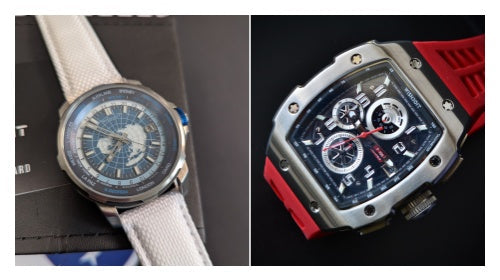
WISHDOIT offers quartz watches with distinctive designs for people who want practical timekeeping without sacrificing personal style. For example, the RACING GT 2.0 Chronograph combines a Japanese Seiko quartz movement with a racing-inspired dial and a bold tonneau-shaped case.
If you prefer a different look, explore the wider collection to compare designs and specifications before deciding which watch suits your routine.
Browse the WISHDOIT All Watches Collection to discover your next everyday timepiece.
Replacing a quartz watch battery is not just about taking out the old cell and inserting a new one. The correct battery, careful handling, proper case closure, and attention to the gasket all matter.
If you have the right tools and a suitable watch, understanding the process can help you make an informed decision. If the case is difficult to open or water resistance matters to you, professional replacement is the safer route.
A well-cared-for watch is easier to enjoy over the long term. Whether you maintain the timepiece you already own or choose a new WISHDOIT design, good watch care starts with understanding what's inside—and knowing when to leave precision work to the experts.
You'll also like
Why Are Jewelry-Inspired Watches Becoming the New Everyday Essential? Meet Pearl Bloom
Beyond the Wrist: 3 Unexpected Ways a Watch Can Define Your Signature Style
Watch Water Resistance Explained: What Does 5 ATM Really Mean?