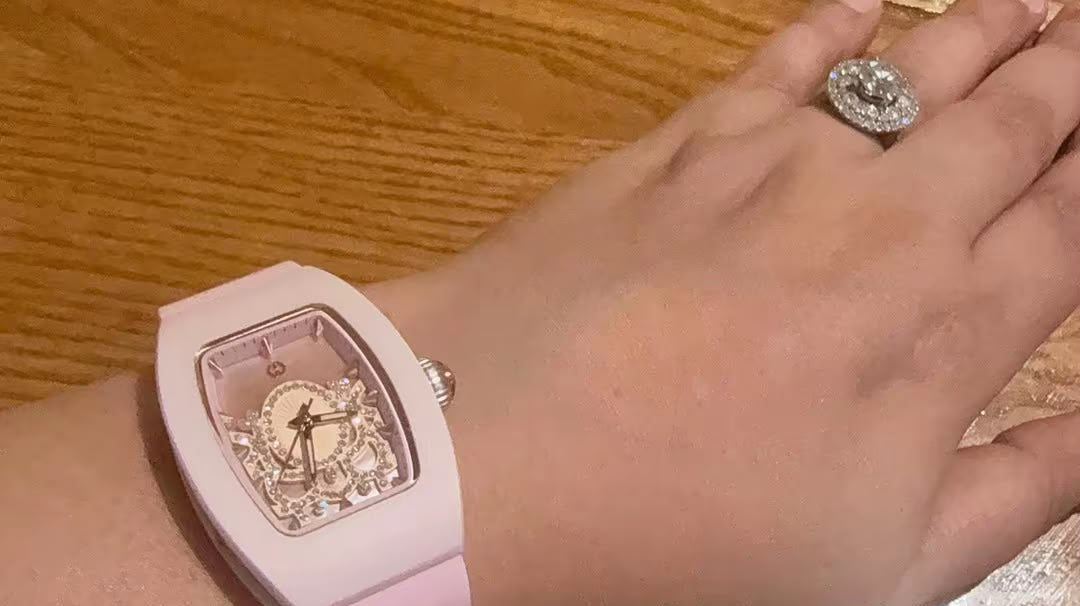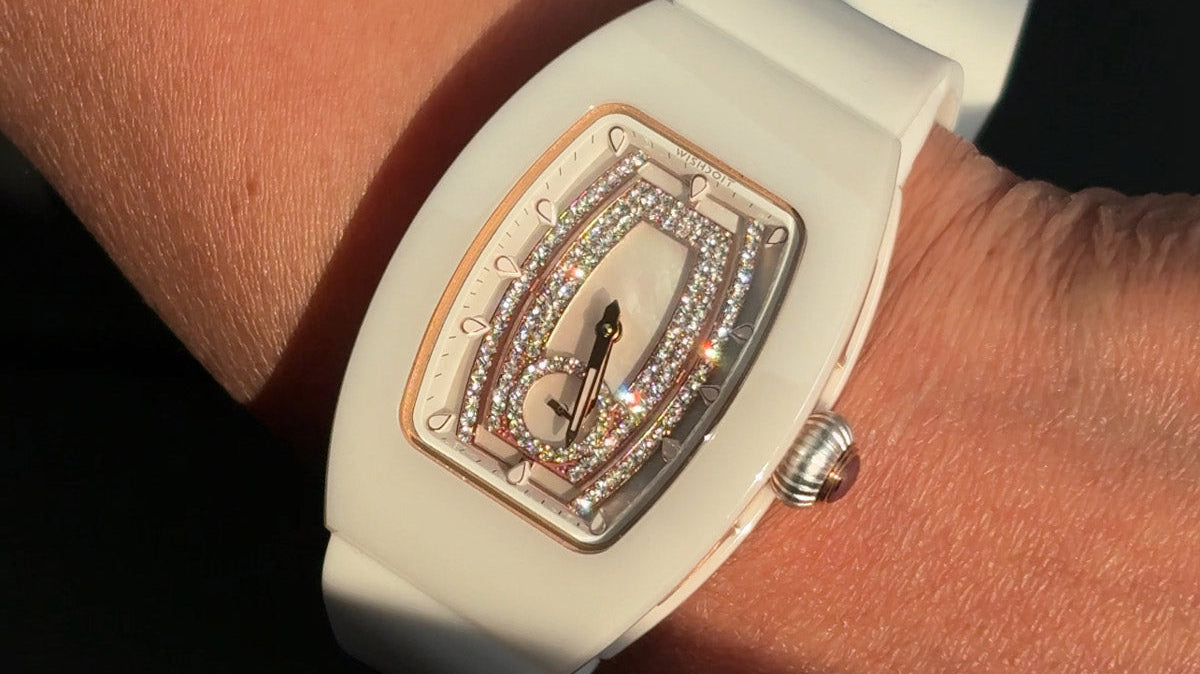


Celestia Ceramic Women’s Watch
$269

Buying your first watch should be exciting—not confusing.
But once you start shopping, the choices can feel overwhelming. Quartz or automatic? Minimalist or skeleton? Round or tonneau? And how much should you actually spend on a watch you'll want to wear for years?
The good news is that you don't need to be a watch expert to make a smart choice. You just need to understand a few essentials: your personal style, the movement that suits your lifestyle, and the budget that makes sense for you.
This beginner's guide will help you find a watch that feels right on your wrist, fits your everyday routine, and offers lasting value beyond its appearance.
Before comparing movements or specifications, think about how you want your watch to look and feel. Your first watch should complement the way you dress, not just follow a trend.
Here are four popular styles worth considering.
Classic watches typically feature clean dials, balanced proportions, and straightforward time displays. They're easy to pair with business attire, smart-casual outfits, and everyday clothing.
If you want one watch that works across different settings, a classic design is a sensible place to start.
Look for clear markers, comfortable proportions, and a color combination you'll still enjoy wearing several years from now.
Chronographs feature a built-in stopwatch function, often accompanied by subdials and additional pushers.
Their layered dials create a more technical appearance, making them a natural choice for people who enjoy motorsport-inspired styling or watches with extra functionality.
For a first chronograph, prioritize legibility. The subdials should be easy to understand, and the case should feel comfortable rather than oversized for your wrist.
Skeleton watches reveal some of the internal components that make a mechanical watch work.
Instead of hiding the movement behind a solid dial, an open design turns the mechanism into part of the visual experience. It's an appealing choice for buyers who appreciate engineering, intricate details, and distinctive watch design.
Because skeleton dials can be visually complex, check that the hands remain easy to distinguish from the components behind them.
A tonneau watch has a barrel-shaped case that offers an alternative to the familiar round watch.
This shape can create a stronger wrist presence and a more architectural look. Depending on the design, it can feel sporty, contemporary, or refined.
If you want your first watch to express more individuality, a tonneau case is worth exploring. Just remember that case dimensions and lug-to-lug proportions matter as much as the stated diameter when determining fit.
Beginner tip: Choose the style you genuinely enjoy wearing. A watch doesn't need to look like everyone else's to be a good first purchase.

The movement is the mechanism that powers and regulates your watch. For most first-time buyers, the biggest decision is between quartz and automatic.
Neither is universally better. The right choice depends on what you value most.
Quartz watches use a battery-powered electronic system regulated by a quartz oscillator.
They're generally easy to own and typically offer reliable everyday timekeeping with minimal routine attention.
Choose quartz if you:
Prefer straightforward, convenient timekeeping.
Don't want to wind your watch regularly.
Like practical features such as a chronograph.
Want to spend more time wearing your watch and less time thinking about its operation.
Quartz watches still need care. Batteries eventually require replacement, and seals and other components may need servicing over time.
Automatic watches use a mechanical movement powered by a mainspring. A rotor responds to wrist movement to wind the mainspring during normal wear.
There is no battery to replace, but the watch does require more attention to its power reserve and eventual mechanical servicing.
Choose automatic if you:
Appreciate traditional watchmaking and moving mechanical components.
Enjoy the interaction of winding and wearing a mechanical timepiece.
Want a watch with a visible skeleton movement or other mechanical details.
Don't mind learning a little about watch care.
An automatic watch may stop if it remains unworn long enough for its power reserve to run out. That doesn't necessarily mean anything is wrong.
| Feature | Quartz | Automatic |
|---|---|---|
| Power source | Battery | Mainspring |
| Daily convenience | Very convenient | Depends on wearing and winding |
| Routine attention | Low | More hands-on |
| Typical ownership needs | Battery replacement and care | Mechanical servicing and care |
| Best for | Practical everyday use | Mechanical appreciation and traditional engineering |
For many beginners, quartz is the easiest starting point. But if the craftsmanship and movement are part of what excites you about watches, an automatic model may be more rewarding.
Your first watch doesn't need to cost thousands of dollars. A sensible budget should reflect your finances, how often you'll wear the watch, and which features matter to you.
Rather than paying more simply because a watch is expensive, compare its materials, movement, construction, design, and after-sales support.
Here is a practical way to approach your budget.
This range can be a good starting point for buyers who want a distinctive design and practical features without making a large initial investment.
Quartz chronographs are worth considering here, particularly if you enjoy detailed dials and convenient stopwatch functionality.
For example, WISHDOIT's RACING GT40 and RACING GT 2.0 chronographs sit around this price range, depending on the current listing and promotion.
This range opens up more options across automatic watches, skeleton designs, GMT functions, and ceramic styles.
It's a useful range if you already know what you like and want to compare different movement types or more distinctive case designs.
Examples from WISHDOIT include the ETERNAL EARTH GMT Mechanical Watch, GLACIER Starry Sky Automatic, and Aerial Prism Mechanical Skeleton Watch. Prices vary by model and promotion.
At this level, you may find more distinctive case constructions, statement-making designs, and additional mechanical options.
WISHDOIT's Armor-Limited Edition Mechanical, Captain Kidd Iced-Out Mechanical, and SNOW LEOPARD Diamond Automatic Watch illustrate some of the designs available in this range.
Before spending more, make sure the additional features, materials, and construction genuinely matter to you.
The rule to remember: Set your budget first, then compare the best options within it. A watch is a personal purchase, not a test of how much you can spend.
Two watches can look similar in photographs but offer different materials and construction. Learning a few basic specifications will help you compare products more confidently.
The case affects appearance, weight, durability, and how the watch feels on your wrist.
Stainless steel is a common choice because of its versatility and everyday practicality. Ceramic offers a different visual finish and feel, while forged carbon designs appeal to buyers looking for a more distinctive material aesthetic.
Don't choose a material based on its name alone. Check the actual specifications of the watch you're considering.
The crystal is the transparent cover over the dial.
Different watches use different crystal materials, each with its own balance of scratch resistance, impact resistance, cost, and maintenance considerations. Read the product specification carefully rather than assuming every watch uses sapphire crystal.
The strap has a major influence on comfort and style.
Metal bracelets: A versatile option for many everyday and smart-casual settings.
Rubber straps: A contemporary choice that can feel comfortable and flexible.
Leather or nylon straps: Offer different textures and a more traditional or casual look, depending on the design.
A well-designed watch should look good, but it should also feel comfortable enough that you'll actually want to wear it.

One of the easiest mistakes for a first-time buyer is choosing a watch based only on its appearance in product photos.
A case that looks balanced on one person's wrist may feel too large or too small on another.
Before ordering, check these measurements:
Case diameter: The width of the case, usually measured in millimeters.
Case thickness: How far the watch rises above your wrist.
Lug-to-lug length: The distance from one end of the case or lugs to the other, where applicable.
Strap width and length: These affect both appearance and fit.
Case shape also matters. A tonneau case can wear differently from a round watch even when their measurements appear similar.
If you're unsure, measure the dimensions of a watch you already find comfortable. Comparing the measurements can give you a more useful reference than choosing by diameter alone.
It's easy to get distracted by a long list of specifications. But more features don't automatically make a watch a better choice for you.
Start with the functions that fit your lifestyle.
Chronograph: Useful if you want to measure elapsed time, with the added appeal of a detailed, instrument-inspired dial.
GMT: Designed to display another time zone, making it useful for frequent travelers or people who regularly communicate across time zones.
Skeleton dial: Best suited to buyers who enjoy seeing the mechanical movement and want the mechanism to be part of the design.
Luminous details: Helpful for reading the dial in low-light conditions, although brightness and duration vary by material and prior light exposure.
Water resistance: Check the rating and the manufacturer's guidance for your specific watch. A water-resistance rating should never be treated as permission to use a watch in every water-related situation.
For a first watch, two or three features that genuinely suit your routine are often more valuable than a complicated specification list you'll rarely use.
The name on the dial is only one part of the buying decision.
A thoughtful purchase should also consider what you're getting for your money and what support is available after the sale.
Before ordering, check:
Clear specifications: Does the product page identify the movement, case material, crystal, and dimensions?
Realistic claims: Are materials and functions described specifically rather than with vague superlatives?
Warranty and returns: Are the terms easy to find and understand?
Customer feedback: Do reviews provide useful information about fit, appearance, and everyday ownership?
Design identity: Does the watch have a character you genuinely connect with?
At WISHDOIT, the focus is on distinctive designs, specified materials, and a range of quartz and automatic watches at different price points. The goal is to give buyers options beyond a conventional minimalist watch, whether they prefer racing-inspired chronographs, mechanical skeleton designs, GMT functionality, or jewelry-inspired styles.
Explore the WISHDOIT All Watches Collection to compare current models, prices, and specifications before making your decision.
If you're still unsure where to begin, these three options illustrate how different your first watch can be depending on your preferences.
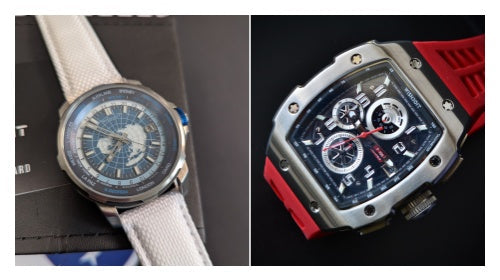
The RACING GT 2.0 combines a Japanese Seiko quartz movement with a racing-inspired dial and a tonneau-shaped case. It's a strong option if you prefer convenient timekeeping, stopwatch functionality, and a bold design.
It's worth considering if you want your first watch to feel distinctive without starting with an automatic movement.
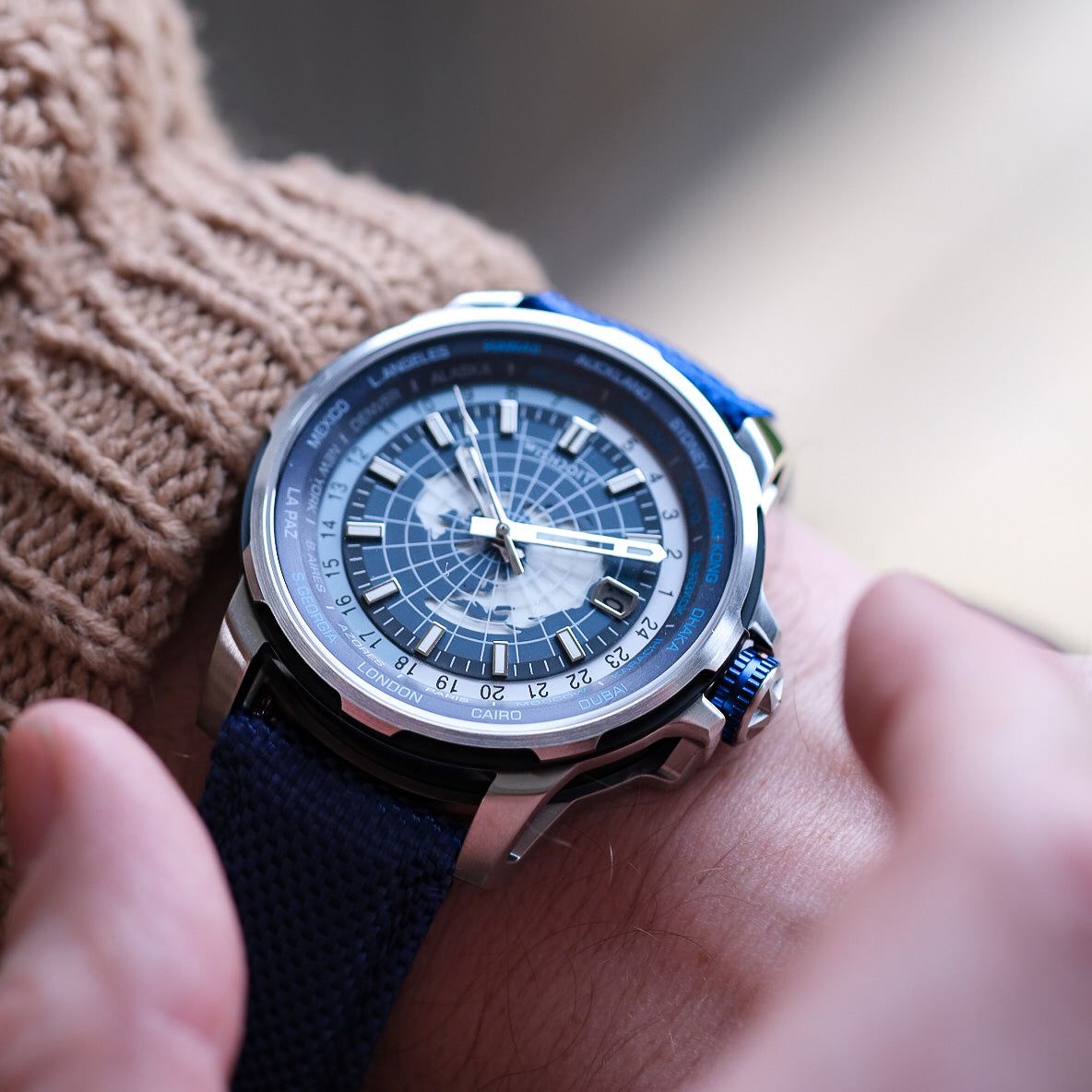
The ETERNAL EARTH GMT pairs an automatic movement with a world-map-inspired dial and a second-time-zone display.
It's a good model to explore if you travel frequently, follow another time zone, or appreciate mechanical watches with a practical complication.
Consider it if you want your first watch to stand out and enjoy the details of mechanical construction.
The best option depends on your budget, wrist size, preferred movement, and the style you'll be happiest wearing. Check the individual product pages for the latest pricing and complete specifications.
Before you place your order, run through this quick checklist:
If you can answer yes to these questions, you're in a much better position to make a confident purchase.
Buying your first watch doesn't require an encyclopedic knowledge of movements or materials. It starts with understanding your own priorities.
Choose a style that reflects your personality, a movement that suits your routine, and a budget that feels sensible. Then compare the specifications carefully and make sure the watch is comfortable, practical, and something you'll enjoy wearing.
Whether you choose a convenient quartz chronograph, an automatic GMT, or a skeleton watch that reveals its mechanical details, the right first watch is the one that fits your life—not just your shopping cart.
At WISHDOIT, there are different designs and movement types to explore as you discover what you enjoy wearing.
Your first watch doesn't need to be the most expensive one. It needs to be the right one for you.
Browse the WISHDOIT All Watches Collection and find a timepiece that matches your style, your budget, and the moments you want to make count.
You'll also like:
Mechanical vs. Quartz Watches: What’s the Real Difference?
How to Choose the Right Watch Shape for Beginners: A Comprehensive Guide
Beyond the Wrist: 3 Unexpected Ways a Watch Can Define Your Signature Style