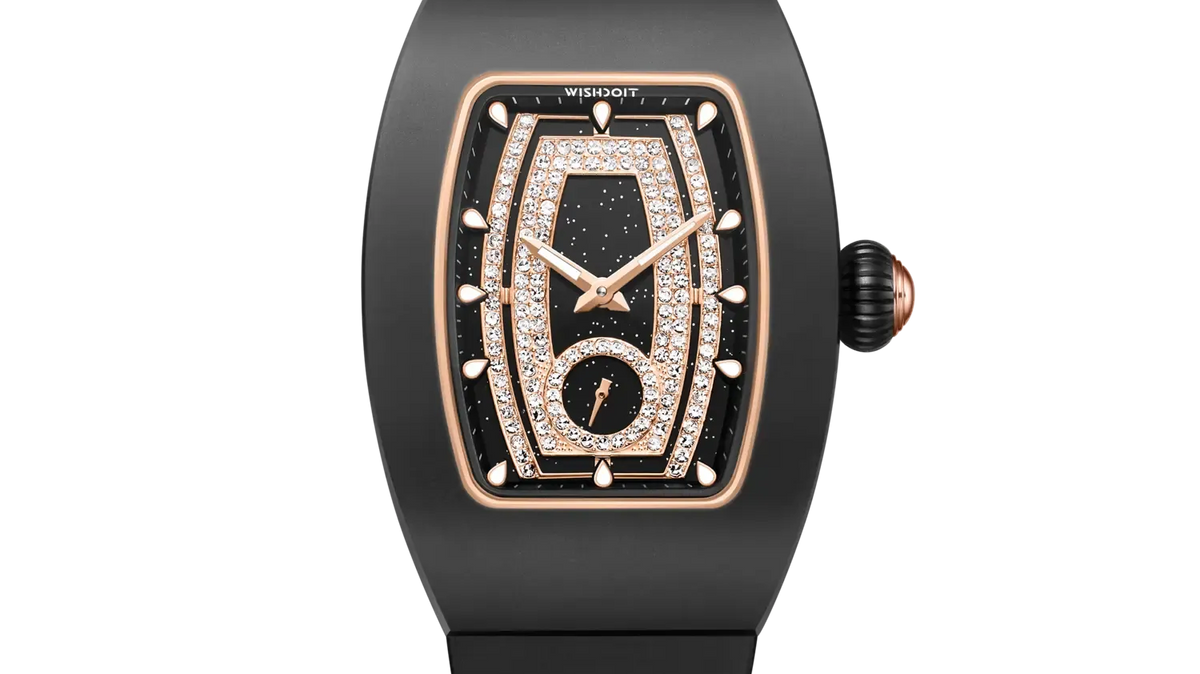


Celestia Ceramic Women’s Watch
$269

Open a product page or look at a busy dial and you will often see a small 24-hour scale or subdial. Many shoppers read that as a GMT. It usually is not. This guide explains the real difference in a 24 hour subdial vs GMT setup, shows how to read a 24 hour watch dial, and helps you decide when a day/night indicator is enough—and when a true dual-time GMT is worth choosing.
No scare copy and no fake promos—just a clear reading of what the dial is actually doing. For a broader primer on dual-time watches, see our companion piece What Is a GMT Watch?. If you are sorting stopwatch subdials instead, start with What Is a Chronograph Watch?.

A 24-hour indicator watch shows the same local day in a 0–24 (or 1–24) scale. The pointer moves once around that scale in a full day. Its job is usually simple:
On many Wishdoit sport tonneau and chronograph models, the product tags list 24-Hour Format. That means a 24-hour indication tied to local time—not an independent second timezone hand. Examples include:
Those watches can look “busy” in a good way. The 24-hour clue is still local time context, not travel dual-time.

A GMT (or dual-time) watch tracks a second time reference that you can set independently of the main local hands—or that follows a dedicated GMT hand / world-time layout designed for another zone. In plain language:
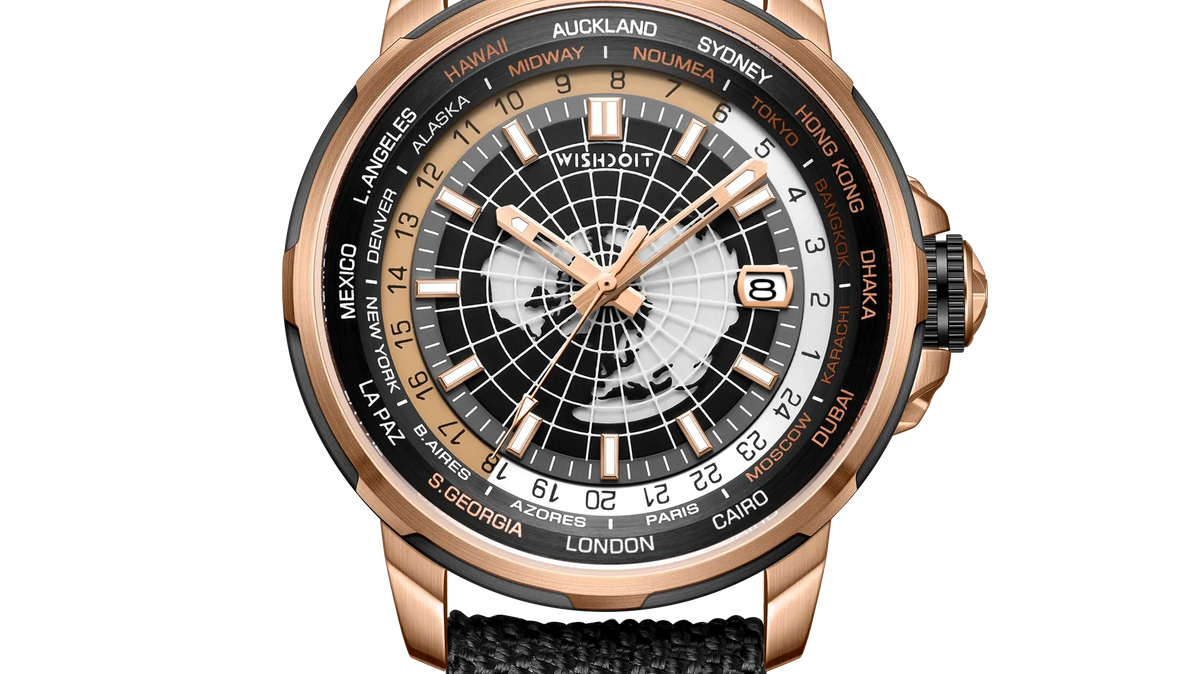
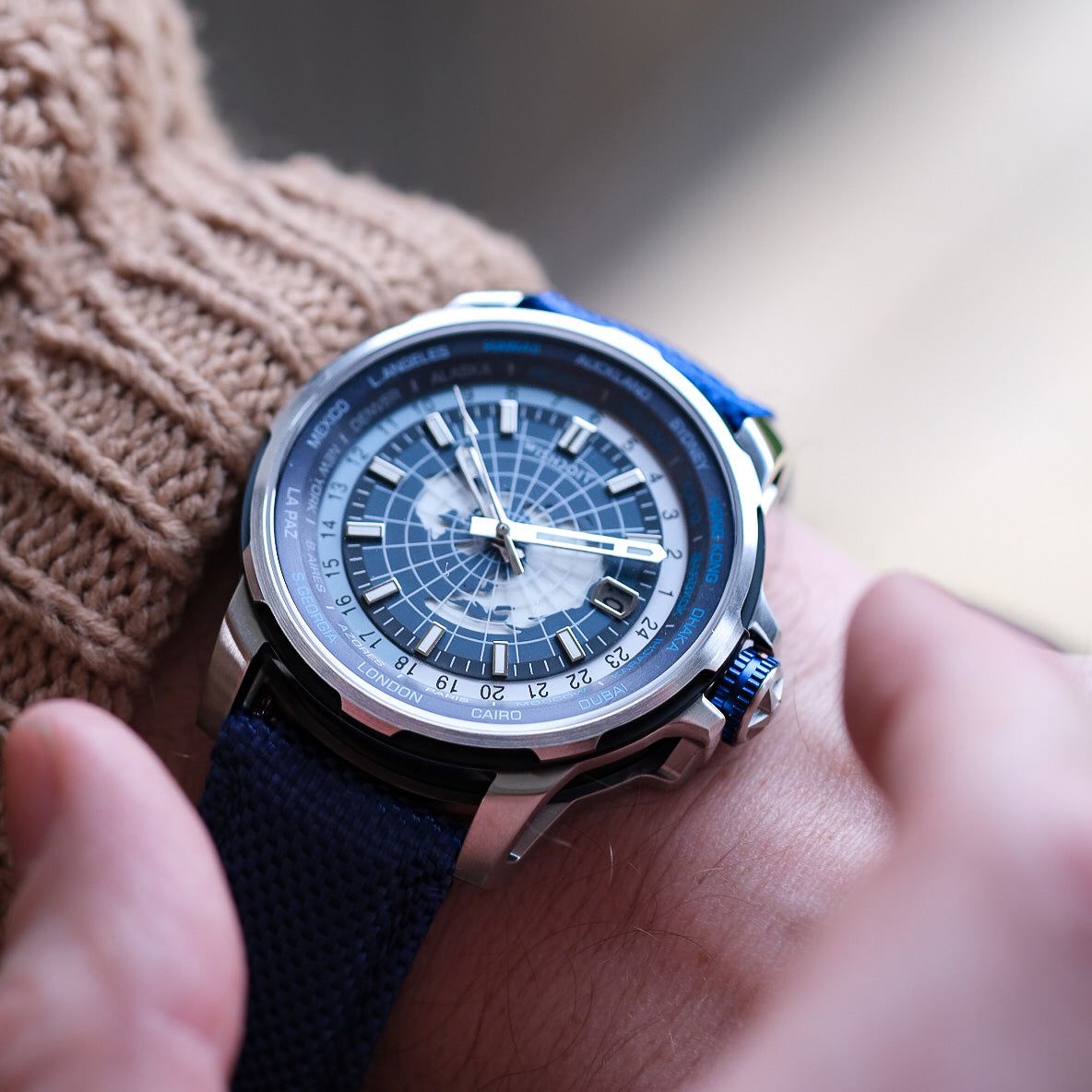
On Wishdoit, the clear GMT / World Time direction model is Eternal Earth GMT Mechanical Watch. Its PDP lists GMT / dual time functions, a Seiko Japanese GMT automatic movement, sapphire crystal, 5 ATM water resistance, and a round 43 mm 316L steel case. Tags include GMT / Dual Time and World Time—not merely “24-Hour Format.”
That honesty matters for shoppers comparing look-alike dials: a 24-hour subdial can resemble a second-time display, but it does not replace a dedicated GMT setup.

On chronographs such as Racing GT 2.0 or Racing GT40, do not confuse the 24-hour indication with chronograph counters. Stopwatch subdials advance only when the chronograph is running; the 24-hour indicator keeps local day context whether or not you are timing a lap. Our chronograph guide walks through those subdials in more detail.
If you need step-by-step crown positions for Wishdoit GMT models, keep How to Adjust the Time Zone and Date on a Wishdoit GMT Watch handy after purchase. For the concept layer, What Is a GMT Watch? The Complete Guide to Dual-Time Zone Timepieces goes deeper.

Before you treat a busy dial as dual-time, run this short checklist:
For a wider map of watch features beyond time zones, Complications Made Simple is a useful companion.

Choose a 24-hour subdial / 24-Hour Format watch when:
Choose a GMT / dual-time watch when:
Both approaches are legitimate. The mistake is buying a 24-hour indicator expecting independent dual-time behavior—or overlooking a true GMT because a sport dial already “looks complicated enough.”
Is every 24-hour subdial a GMT?
No. A local 24-hour indicator and a GMT dual-time function solve different problems. GMT vs 24 hour subdial is mostly about independence: can the second display track another city?
Why do chronographs often show a 24-hour scale?
It keeps day/night readable on a crowded dial and balances the layout next to timing counters. It is still local context unless the watch is specified as GMT.
Where does Eternal Earth fit?
Eternal Earth is Wishdoit’s ACTIVE GMT / World Time automatic for dual-time use. Sport tonneau models with 24-Hour Format remain indicators unless a listing explicitly says otherwise.
What about warranty wording?
Wishdoit product pages reference a 2-Year Warranty / 2-year limited warranty on these models—not a five-year claim. Specs such as 316L steel, crystal type, and 5 ATM should always be confirmed on the live PDP before you buy.
A 24-hour subdial is a helpful local day/night clue. A GMT is a dual-time tool. Once you can tell them apart, dial shopping gets calmer: pick the indicator watches when you want sport character and local clarity, and pick Eternal Earth GMT when you truly need two zones on one wrist.
Questions about reading a specific dial? Email support@wishdoitwatches.com or support@wishdoitwatch.com—both are official Wishdoit support addresses.