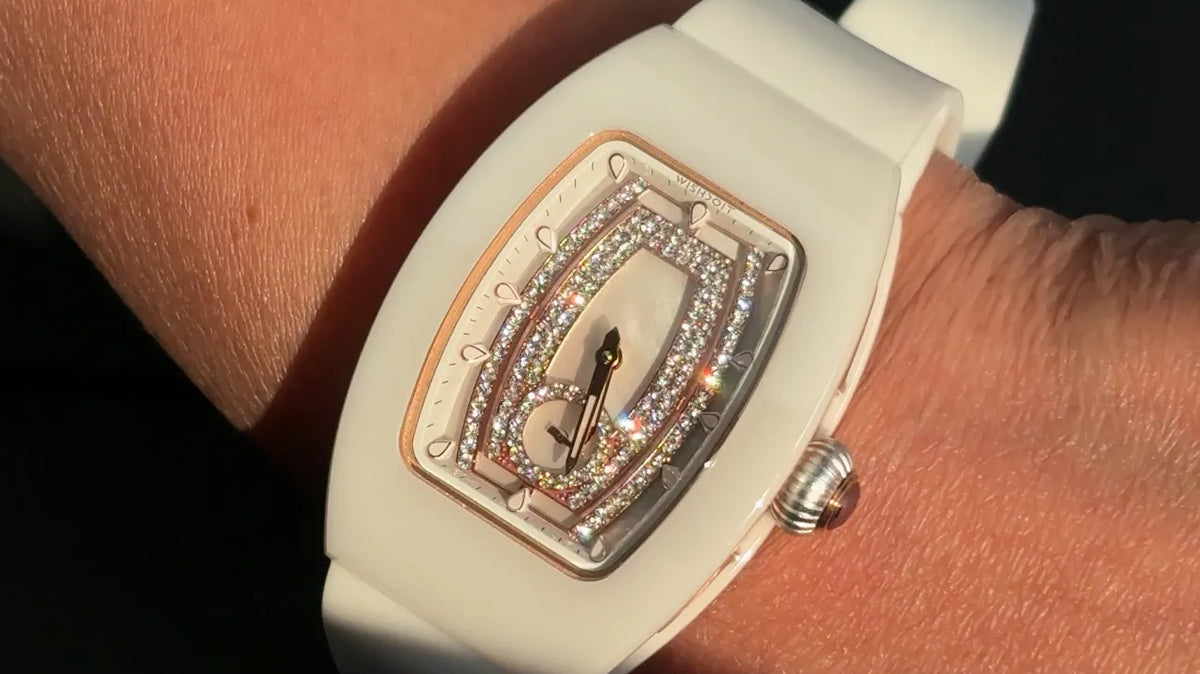


Celestia Ceramic Women’s Watch
$269

A watch does more than tell the time. Some display the date, others track a second time zone, and some let you measure elapsed seconds with a built-in stopwatch. These additional functions can make a watch more useful—and give its design more character.
In watchmaking, these extra functions are called complications. The name may sound intimidating, but understanding them doesn't have to be complicated.
Whether you're choosing your first watch or looking to add something different to your collection, this guide explains the most useful watch features in simple terms—and how to decide which ones are right for you.
A complication is any function on a watch beyond displaying the hours, minutes, and seconds.
Some complications are practical, such as a date window or a second-time-zone display. Others, such as a chronograph, allow you to measure elapsed time. Some features focus more on the mechanical experience or visual design.
A complication doesn't automatically make a watch better. The best feature is the one that suits your routine, interests, and personal style.
For example:
If you travel often, a GMT function may be useful.
If you like measuring elapsed time, a chronograph can be practical.
If you enjoy mechanical engineering, a skeleton dial may be especially appealing.
If you want to see how much energy remains in an automatic watch, a power reserve indicator can help.
Let's look at the features you're most likely to encounter.

The date display is one of the most common watch complications.
It usually appears as a small window on the dial, showing the current day of the month. Some watches use a date hand or a larger date window instead.
A date display is especially convenient if you wear your watch every day. It adds useful information without making the dial feel too complicated.
Most standard date displays show dates from 1 to 31. Since not every month has 31 days, the date may need to be adjusted at the end of shorter months.
If your watch has a date function, check the instruction manual before adjusting it. Some mechanical movements have a restricted time window during which calendar adjustments should be avoided.
For a first watch, a simple date display is a practical feature that can make everyday ownership easier.
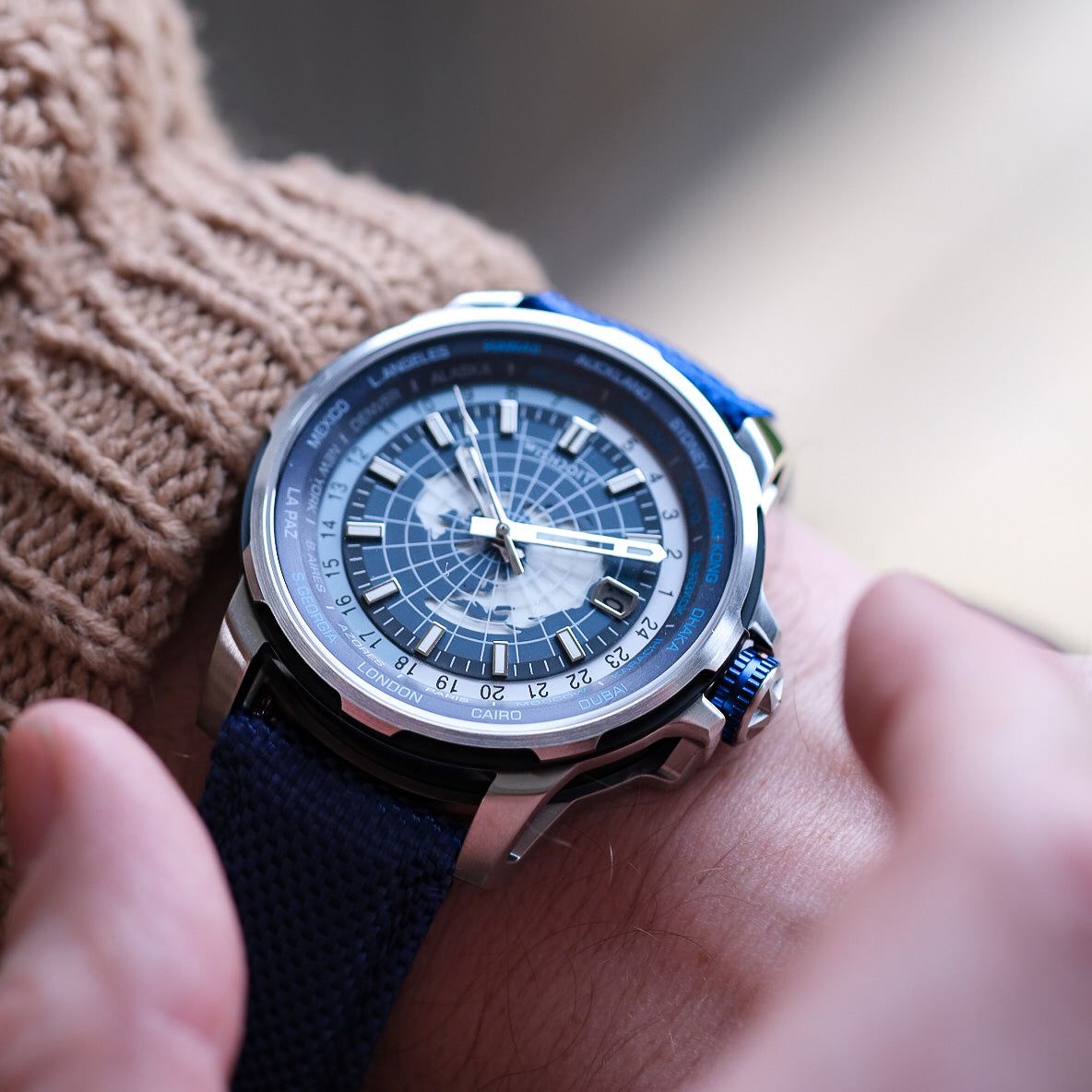
A GMT watch is designed to display a second time zone alongside local time.
This can be useful for frequent travelers, people working with international teams, or anyone who regularly communicates with friends and family in another part of the world.
Many GMT watches use an additional 24-hour hand. It works with a 24-hour scale to indicate another time zone, while the main hour and minute hands continue showing local time.
A GMT function can help you:
Check the time at home while traveling.
Keep track of another city during international calls.
Coordinate across time zones without relying on a phone.
Explore the ETERNAL EARTH GMT.
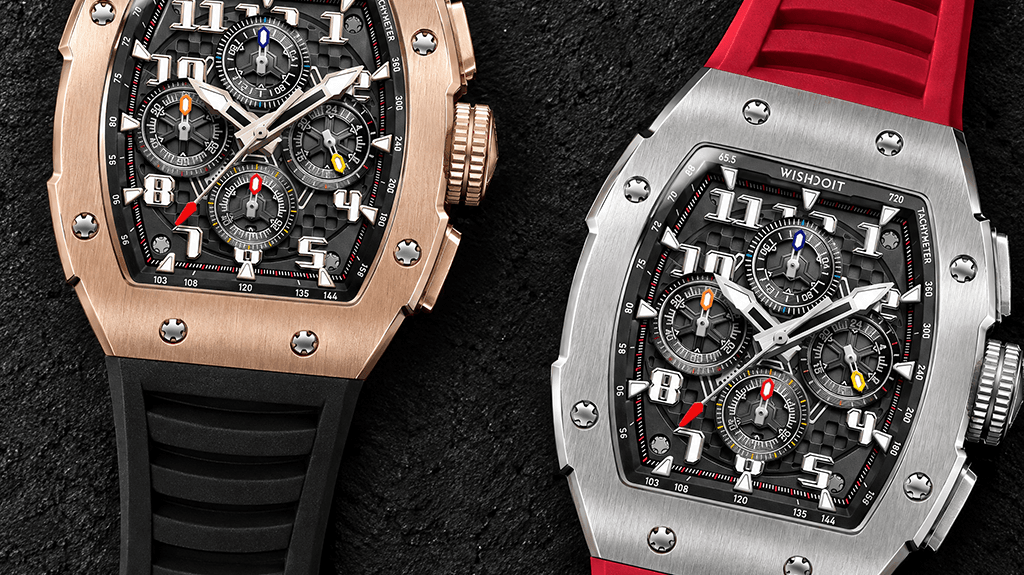
A chronograph is a watch with a built-in stopwatch function.
It typically uses pushers on the side of the case to start, stop, and reset the timer. Small subdials may display elapsed minutes, running seconds, or other timing measurements, depending on the movement.
Chronographs are often recognized by their layered dials and additional buttons. Their appearance can be technical and dynamic, but the function is practical too.
You can use a chronograph to:
Time a workout or run.
Measure how long a task takes.
Track a cooking interval.
Record elapsed time during everyday activities.
Not every chronograph has the same layout. One subdial may show the running seconds, while another records elapsed minutes. Some movements display fractions of a second.
Always check the product specifications to understand what each counter does.
WISHDOIT's RACING GT 2.0 Chronograph Watch brings together a racing-inspired dial, a tonneau-shaped case, and a Japanese Seiko quartz movement.
It's worth exploring if you want a practical stopwatch function with a bold, performance-inspired design.
Discover the RACING GT 2.0 Chronograph.

An automatic mechanical watch stores energy in its mainspring. As the watch runs, that stored energy gradually decreases.
The power reserve tells you approximately how much running time remains before the watch needs additional winding.
Some watches display this information through a small hand and scale on the dial. Others provide the information through their specifications rather than a visible indicator.
A power reserve indicator can help you understand when your watch may need winding.
It's particularly helpful if you own several automatic watches and rotate between them. Instead of wondering why a watch has stopped, you can see how much energy remains.
Remember that power reserve depends on the movement and its condition. The displayed amount is an indication, not a guarantee of exact remaining running time.
When comparing automatic watches, check both the stated power reserve and whether the model includes a visible indicator.
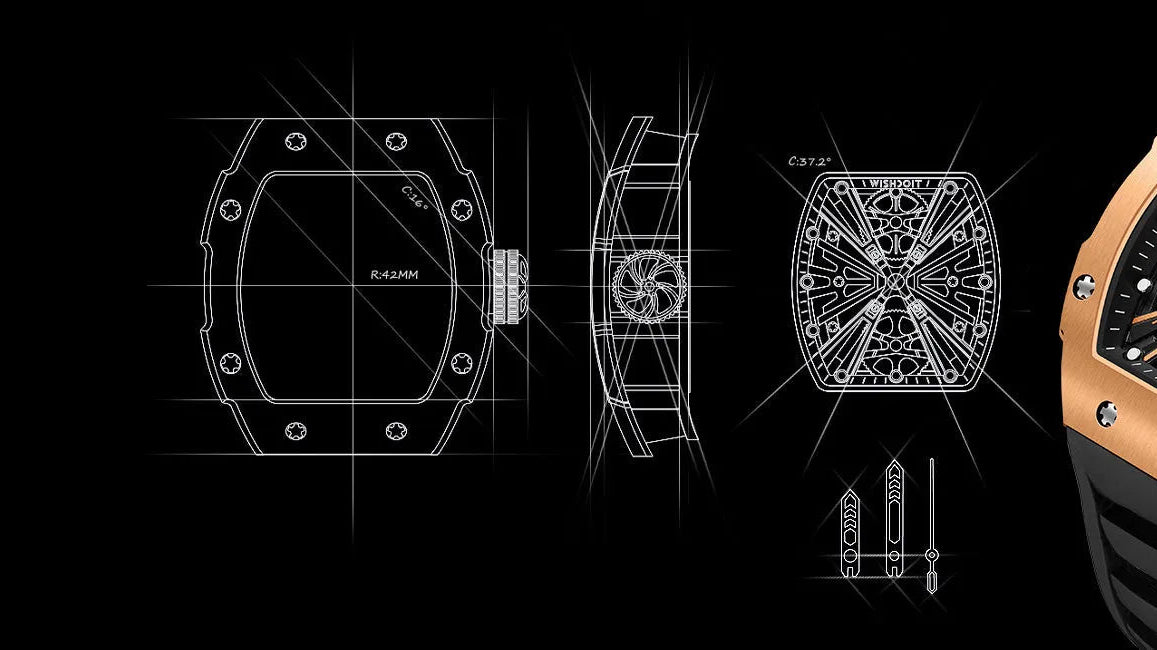
A skeleton watch reveals parts of its movement through an open or partially open dial.
Rather than hiding the mechanism, the design makes the movement part of the watch's visual identity. Depending on the model, you may be able to see gears, bridges, and other components working together.
A skeleton dial is not necessarily a complication in the strict technical sense. It is primarily a design approach that highlights the movement.
For many enthusiasts, the appeal is the connection between function and design. The watch becomes more than a dial with hands—it offers a view into the mechanics of timekeeping.
WISHDOIT's Aerial Prism Mechanical Skeleton Watch features an open mechanical design and a distinctive tonneau-shaped case. It may appeal to buyers who enjoy visible engineering and a more architectural look.
Explore the Aerial Prism Mechanical Skeleton Watch.
Luminous hands and markers help make a watch easier to read in dim environments.
The luminous material absorbs light and then emits a glow in darker conditions. The brightness and duration depend on the material, how much light it has absorbed, and the surrounding environment.
Lume is not a stopwatch or calendar function, but it is a useful feature that improves readability.
When comparing watches, look at which hands and markers are luminous. A watch may have luminous hands without every dial marker glowing.
For everyday wear, this can be a practical detail—especially if you often check the time in low light.
It's easy to assume that a watch with more complications is automatically more valuable. But additional functions are only useful when they match your needs.
A watch with a GMT display may be ideal for someone who travels frequently, while a chronograph may be more practical for someone who likes measuring intervals.
A skeleton watch may be the right choice for a person who appreciates mechanical design, even if it has fewer additional functions.
When choosing a watch, consider:
Your routine: Which features will you use regularly?
Readability: Can you understand the dial at a glance?
Movement: Do you prefer quartz convenience or automatic mechanics?
Design: Does the watch feel right for your personal style?
Maintenance: Are you comfortable with the care the movement requires?
The best watch is not necessarily the one with the longest feature list. It's the one whose functions and design make sense for your life.
WISHDOIT offers a range of watches built around different functions and design directions—from quartz chronographs to automatic GMT and skeleton models.
If you're deciding which complication to explore first, consider these options:
For travel: ETERNAL EARTH GMT Mechanical Watch, with a second-time-zone display.
For timing: RACING GT 2.0 Chronograph Watch, with a stopwatch function.
For visible mechanics: Aerial Prism Mechanical Skeleton Watch, with an open movement design.
Each offers a different way to experience a watch beyond basic timekeeping.
Before choosing, review the movement, dimensions, materials, and feature details on the individual product page. That way, you can compare what each watch actually offers rather than choosing by appearance alone.
Browse the WISHDOIT All Watches Collection to discover a design and set of features that suit your everyday life.
Watch complications may sound technical, but their purpose is straightforward: they add information or functionality beyond telling the time.
A date display helps with everyday planning. A GMT function tracks another time zone. A chronograph measures elapsed time. A power reserve indicator shows how much energy remains in an automatic movement. A skeleton dial lets you appreciate the mechanism behind the watch.
You don't need every feature on your wrist. Start with the ones that fit your lifestyle, then choose a design you genuinely enjoy wearing.
A great watch isn't defined by how many features it has. It's defined by how well those features fit your life.
You'll also like:
What Makes a Peacock-Inspired Watch So Unique?
Summer Strap Care: How Sweat and Heat Can Affect Your Watch Band (And What to Do About It)
Why Geometric Dial Watches Are Becoming the New Luxury Trend