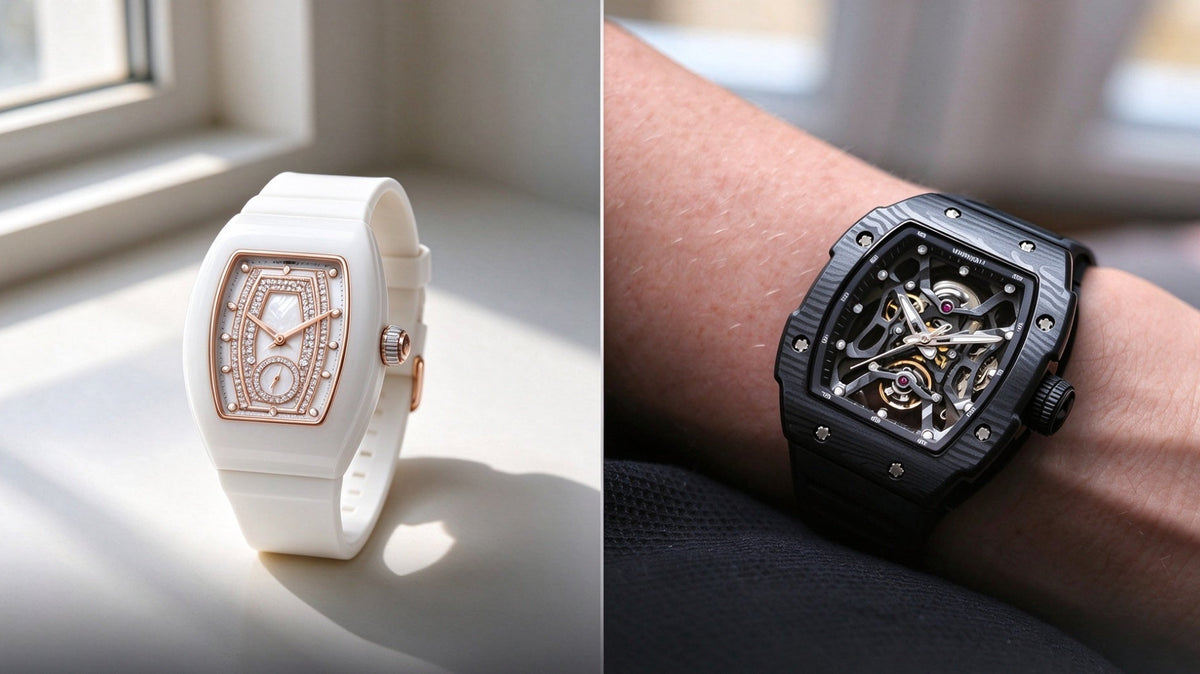


Celestia Ceramic Women’s Watch
$269

Your automatic watch stopped after sitting on your desk for two days? Don't worry. Here's what power reserve really means and how long a mechanical watch should keep running.
You take off your automatic watch on Friday evening.
You put it back on Monday morning.
And suddenly, it's stopped.
Is something wrong with the watch?
Probably not.
The answer is often one simple specification: power reserve.
If you've ever wondered how long an automatic watch should run without wearing it, understanding power reserve will make mechanical watches much easier to appreciate.

Power reserve is simply how long a fully wound mechanical watch can continue running before it stops.
Think of it as the watch's energy tank.
Inside a mechanical movement is a tightly wound mainspring. As the spring slowly releases its stored energy, it powers the gears, escapement, and hands.
When the stored energy runs out, the watch stops.
That's the power reserve.
For example, if an automatic watch has a 48-hour power reserve, it can theoretically continue running for around two days after reaching a sufficient winding level—even if you take it off your wrist.
This is what makes an automatic watch different from a quartz watch.
An automatic movement contains a rotating component called a rotor.
As you move your wrist throughout the day, the rotor moves and transfers energy to the mainspring.
The more consistently you wear the watch, the more energy it can replenish—up to the movement's winding capacity.
That's why an automatic watch that is worn regularly may continue running without you manually winding it.
Wishdoit's own guidance recommends initiating a self-winding watch with manual winding before relying on the automatic winding system, and notes that regular wear helps maintain its power reserve.
There isn't one universal answer.
Power reserve depends on the movement.
Many mechanical watches provide roughly 40–50 hours, while some modern movements can offer significantly longer reserves.
For example, current Wishdoit models show different power-reserve specifications:
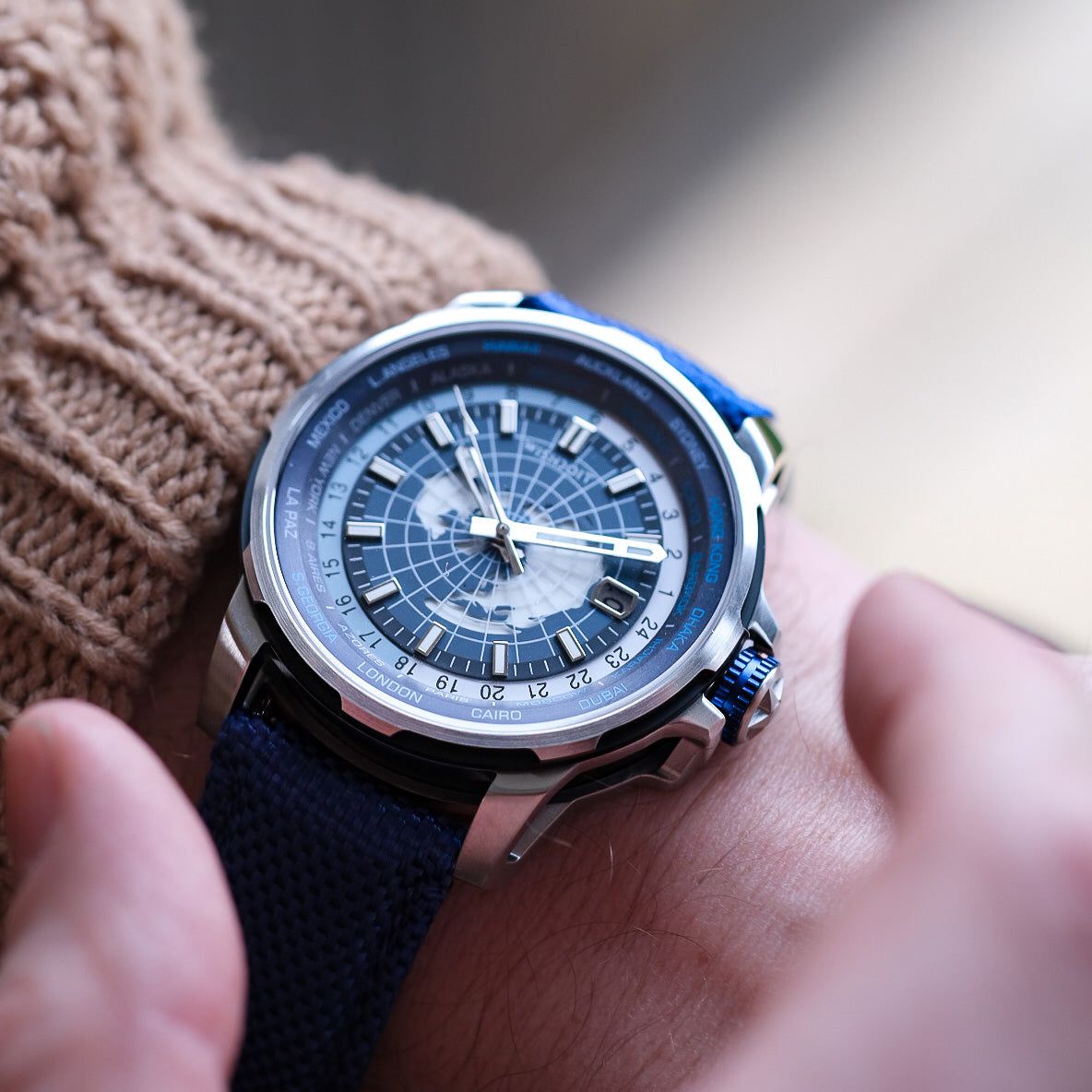
Abyss Voyager GMT Automatic — 42 hours
These differences are completely normal because power reserve depends on the movement's design, mainspring, and winding system.
So when comparing automatic watches, don't simply ask:
“Is this an automatic watch?”
Also ask:
“How much power reserve does the movement provide?”
Let's say your watch has a 48-hour reserve.
If the movement is sufficiently wound at 8:00 PM on Friday, it may continue running until around 8:00 PM on Sunday without additional winding.
But there's an important detail:
Power reserve is a maximum specification under appropriate conditions—not a promise that every wearing pattern will produce exactly 48 hours of running time.
How much energy the watch has stored depends on factors such as how much it has been wound and how it has been worn.
This is why two people wearing the same automatic watch may experience slightly different results.
This is one of the most common questions from new mechanical-watch owners.
If your automatic watch has stopped, it doesn't necessarily mean there's a problem.
It ran out of power reserve.
If you leave an automatic watch off your wrist longer than its available reserve, the mainspring eventually releases its stored energy and the movement stops.
For example:
48-hour reserve + 3 days off your wrist = the watch may stop.
That's normal mechanical-watch behavior.
The solution is usually to restart the watch according to the manufacturer's instructions, set the correct time, and wear it regularly.
Not necessarily.
An automatic watch doesn't simply “fill up” continuously.
The rotor transfers energy into the mainspring as you move, while the movement simultaneously consumes energy to keep running.
If you're active enough and wear the watch regularly, the movement can maintain a healthy reserve.
If your daily activity is limited or the watch isn't worn for long enough, the stored energy may gradually decrease.
That's why Wishdoit recommends wearing a self-winding watch regularly to maximize its power reserve.
Not necessarily.
A longer power reserve is convenient, especially if you rotate between several watches.
Imagine you own three automatic watches.
With a shorter reserve, a watch may stop after only a day or two in the drawer.
With a longer reserve, you have more flexibility before needing to restart it.
But power reserve shouldn't be the only thing you consider.
A good mechanical watch is about the complete package:
Movement + materials + design + functionality + comfort.
For example, the Aerial Prism combines a 48-hour power reserve with an automatic mechanical movement, tonneau case, skeletonized architecture, and 316L stainless steel construction.
The Abyss Voyager GMT, meanwhile, offers a 42-hour power reserve alongside a GMT function, sapphire crystal, ceramic bezel, and 15 ATM water resistance.
The point is simple:
Choose the specifications that match how you actually wear your watch.
A practical choice for everyday wear.
If you normally wear your watch every day, this can be more than enough.
A useful balance between everyday wear and convenience.
You can take your watch off for a weekend and still have a good chance of finding it running when you return.
Particularly useful for people who rotate between several mechanical watches.
The longer reserve gives you more flexibility between wears.
But remember:
Longer doesn't automatically mean better.
The right power reserve is the one that fits your lifestyle.
When comparing automatic watches, don't stop at the phrase “self-winding.”
Look at these five things:
1. Movement
What caliber or movement type is inside?
2. Power Reserve
How long can it run without additional winding?
3. Crystal
Is it sapphire, sapphire-coated mineral, or mineral crystal?
4. Case & Bracelet
What materials are used?
5. Water Resistance
Is it designed for everyday splashes, swimming, or more demanding use?
This approach gives you a much clearer picture of what you're actually buying.
A stopped automatic watch isn't necessarily a broken watch.
Sometimes, it simply ran out of energy.
That's the beauty—and the charm—of mechanical watchmaking.
A quartz watch can run for years on a battery.
An automatic watch asks you to interact with it.
Your movement winds the mainspring. The stored energy keeps the mechanism alive. And the power reserve tells you how long that mechanical heartbeat can continue when you're not wearing it.
So the next time your automatic watch stops after sitting in a drawer, don't panic.
Check the power reserve first.
It may simply be telling you:
“It's time to wear me again.”
You'll also like:
Why GMT Dive Watches Are Perfect for Modern Explorers | Abyss Voyager GMT Automatic Diver?
How to Prevent a Foggy Watch? Quick Solutions to Prevent Moisture Buildup
How Triton Prism Captures the Magic of the Ocean on Your Wrist