
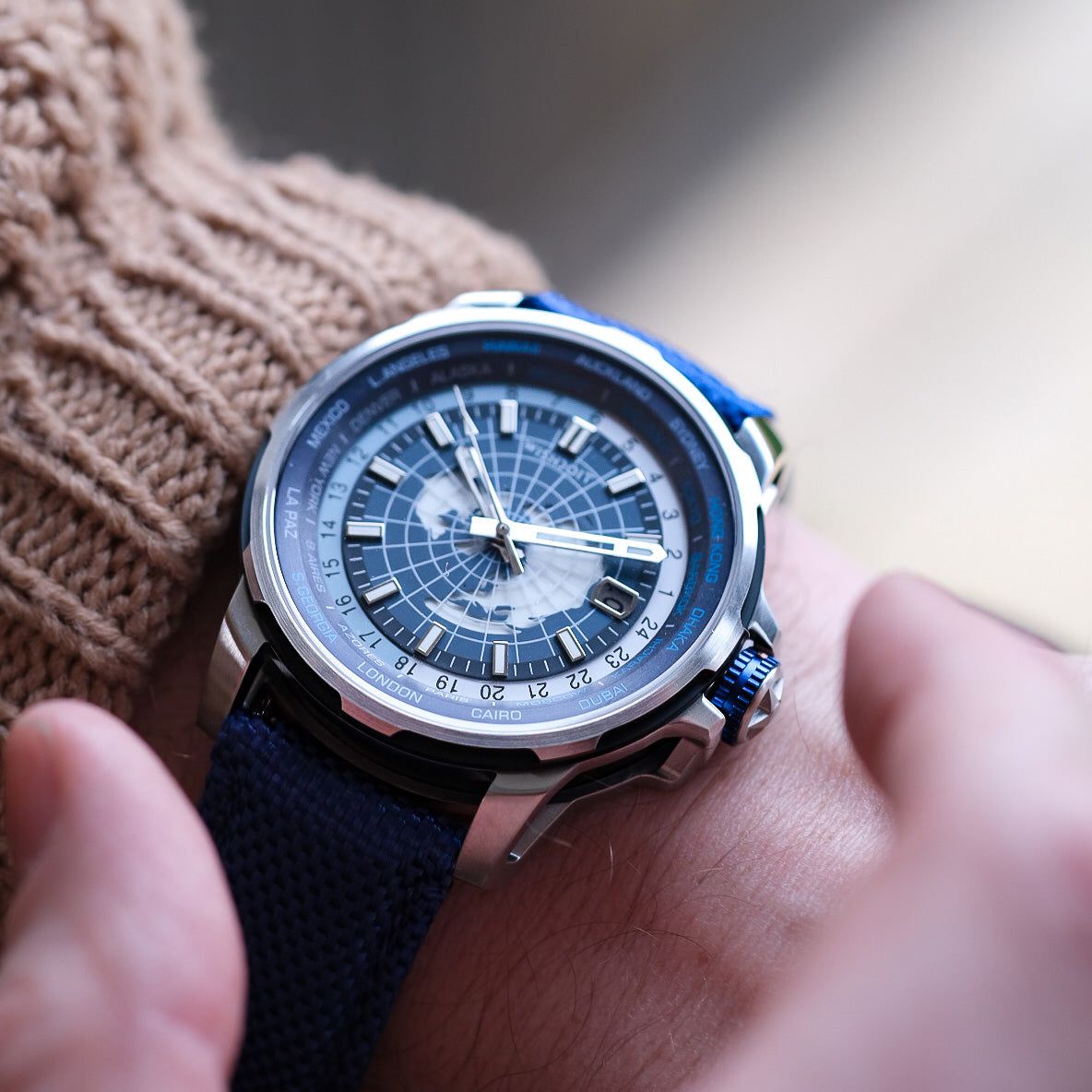


Walk into any room of watch enthusiasts, and you will find a strange contradiction. The same people who debate the merits of ceramic bezels and high-beat movements often have a battered Casio hiding in a drawer. For decades, the Japanese brand has occupied a unique space: cheap, ubiquitous, and strangely beloved. But in 2026, with inflation driving up prices and new competitors offering compelling alternatives, the question must be asked. Is Casio still worth buying, or has the legend finally aged out?
The answer, like most things in horology, depends entirely on what you are looking for.
The Case for Casio: Heritage and Reliability
Let's start with the good news. Casio is not dying. In fact, the company has just achieved a stunning turnaround. In fiscal year 2026, its net profit reached $115 million—more than double that of the previous year.
What is driving this resurgence? Surprisingly, it is not the rugged G-Shock line, though that remains popular. Instead, Casio is being saved by Gen Z buyers discovering its cheapest, most retro models. Watches like the A159 and MTP-1302, which you might remember from the 1990s, have become highly sought-after by younger consumers who embrace the "vintage" aesthetic .
This tells us something important. Casio still holds cultural currency. A basic digital watch is no longer just a tool; it is a fashion statement, a piece of nostalgia, and an accessible entry point into a hobby that can otherwise become very expensive.
The Price Problem: When 20 Feels Like 50
However, the financial reality of 2026 complicates the value proposition. Take the legendary F-91W, the watch that has been the "gateway drug" for enthusiasts since 1989. For decades, you could buy one for 15. Today, you are likely staring at a 30 price tag at major retailers .
For a watch made of thin plastic with a backlight so dim it struggles to illuminate its own face, twenty dollars feels steep. The technical specifications are primitive by 2026 standards. The "Water Resist" label on the dial technically means 30 meters of splash resistance—you cannot even take it in the shower. The resin crystal scratches if you look at it too hard .
The problem for Casio is that they are their own worst enemy here. For just a few dollars more, you can get the MRW-100H, which offers 100 meters of water resistance, a functional orange backlight, and a rotating bezel . Or, for a slightly higher investment, the AE-1200WH "Casio Royale" gives you a 10-year battery, world time for 31 time zones, and a cool world map display .

When you look purely at the specs, the base-model Casio is arguably overpriced for what it actually offers. You are paying the "Heritage Tax"—the premium for a design that hasn't changed since the Berlin Wall fell .
The Wishdoit Alternative: Modern Value at a Similar Price
This is where the conversation shifts. If you have a budget of around 200 for a watch, you are no longer limited to the plastic fantastic offerings from the 1980s. Brands like Wishdoit have stepped into this space with a very different philosophy.
While Casio focuses on retro-digital heritage, Wishdoit watches focus on mechanical value. For a similar price point to a mid-range Casio (or only slightly higher), you can access automatic mechanical movements, sapphire-coated crystals, and robust stainless steel cases.
Take the Nereus Facet series as an example. For just $419, you can own a 39mm dive watch powered by a PT5000 automatic mechanical movement. This is a high-beat movement (operating at 28,800 vibrations per hour) with an architecture derived from the legendary ETA 2824; it features hacking seconds, manual winding capability, and a smooth, sweeping second hand. Furthermore, it comes equipped with a sapphire crystal, a ceramic bezel, and 150 meters of water resistance.
Even the entry-level offerings from Wishdoit focus on durability and material innovation. Models like the Celestial utilize ceramic cases—a material usually reserved for high-end luxury watches—offering extreme scratch resistance at an accessible price .
Here is a direct comparison:
If you have $$500, the value equation flips. You are no longer just buying a tool to tell time; you are buying a piece of mechanical engineering that can be serviced, maintained, and passed down.
So, Is Casio Outdated?
Technically speaking, yes. The F-91W and many of its siblings are technologically ancient. The materials are cheap, the lights are dim, and the waterproofing is minimal .
But watches are not always rational. The F-91W feels like a souvenir from a simpler time. It weighs 21 grams and disappears on your wrist . You can wear it while doing yard work or traveling through sketchy neighborhoods without a second thought. As one reviewer noted, there are watch fans who own $10,000 Rolexes but still keep an F-91W in their drawer .

Casio remains relevant in 2026 because of emotional durability, not physical durability. The brand is being saved by a generation that values the low-stakes, nostalgic charm of a watch that costs less than a video game .
The Final Verdict
Buy a Casio if: you want a piece of pop culture history, a beater watch for rough activities, or an affordable introduction to the hobby with zero maintenance hassle.
Conversely, you should opt for a Wishdoit (or a similar microbrand) if you are ready to move beyond plastic construction. This is the right choice if you prioritize mechanical movements, robust and durable materials, and the longevity inherent in a serviceable automatic timepiece. At a price point under $500, the value proposition offered by Wishdoit watches clearly surpasses that of Casio.
Casio is not "dead," but the argument that it represents the best value for money is harder to defend in 2026 than it was in 1996. You are now paying for the legend. Whether that is worth it is up to you.
You'll also like
Inside the PT5000: Is This the Most Underrated Automatic Movement on the Market?
The Ultimate Guide to Watch Case Materials: Pros, Cons & Iconic Examples