
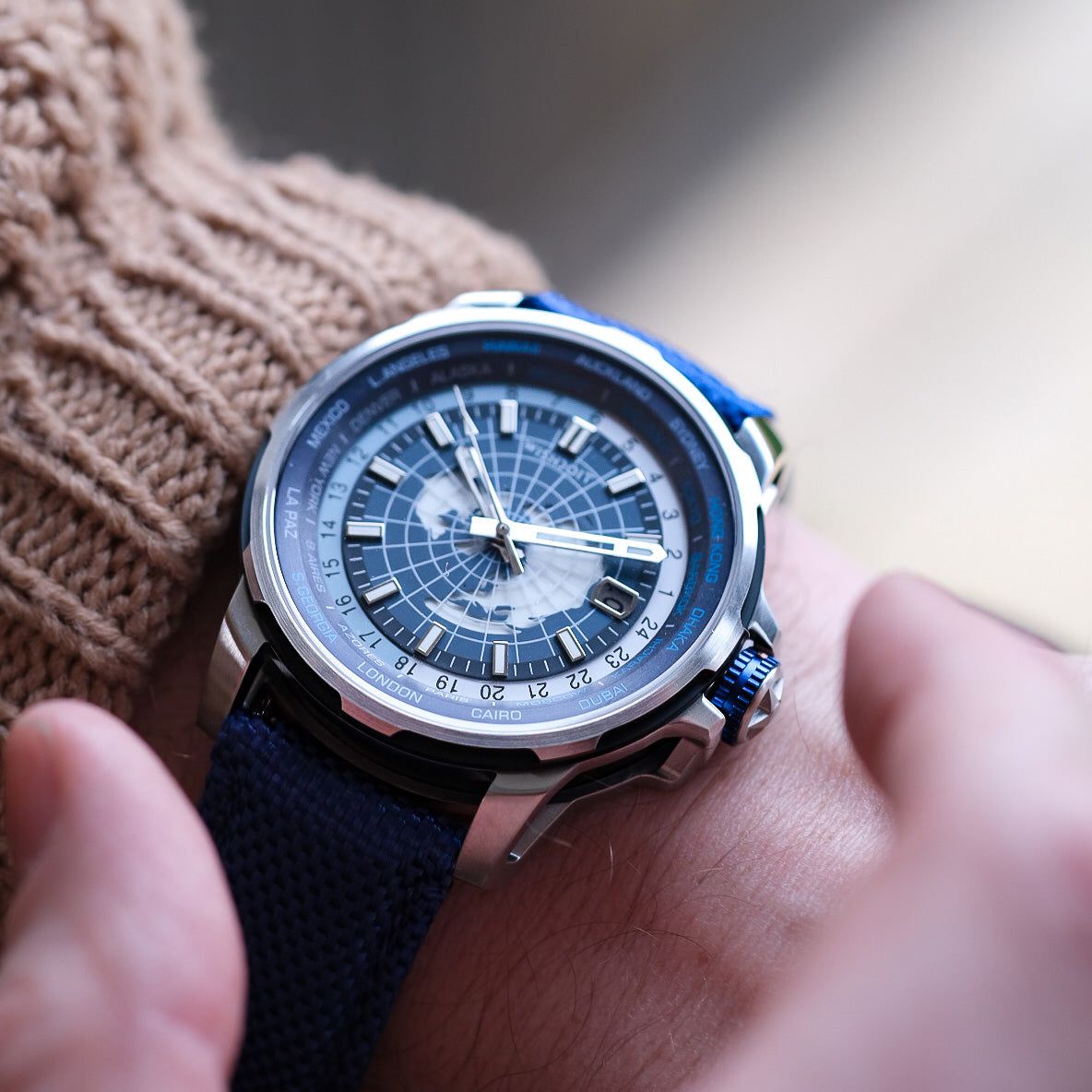


Inside your wristwatch, a miniature world is in constant motion. Gears spin, springs unwind, and levers tick back and forth—thousands of times per hour, day after day, year after year. All of this activity happens in a space barely larger than a coin, with components thinner than a human hair.
And it all depends on a substance you'll never see: oil.
The lubrication of a watch movement is one of horology's most misunderstood and invisible arts. How much oil does a mechanical watch actually need? The answer might surprise you—and it reveals just how precise watchmaking truly is. Whether you own a Wishdoit watch or a vintage heirloom, understanding this hidden world deepens your appreciation for the engineering on your wrist.
The Shocking Truth: Less Than You'd Imagine
Let's cut straight to the answer. A typical mechanical watch movement requires approximately one thousandth of a milliliter of lubricant in total.
To put that in perspective:
-
A single drop of water is about 0.05 milliliters
-
A watch movement uses 1/50th of a drop
-
You could lubricate 50 watches with one tiny drop of oil
This microscopic quantity is spread across roughly 50 critical friction points inside the movement. The oil applied to each individual jewel is so small that it's virtually invisible to the naked eye. Watchmakers work under magnification, using tools thinner than a human hair to deposit amounts so tiny that the oil is barely visible as a glistening ring within the jewel's setting.
Quality timepieces like Wishdoit watches are assembled with precisely these considerations in mind. The Seiko and Miyota movements used in Wishdoit watches are designed with specific lubrication points that have been refined over decades of Japanese engineering—ensuring that when properly maintained, they deliver reliable performance year after year.

Where Does the Oil Go?
A mechanical watch doesn't just get one type of oil in one place. Different components require different lubricants with varying viscosities.
Key Lubrication Points
| Component | Lubrication Needs |
|---|---|
| Balance staff jewels | Microscopic drop of low-viscosity oil |
| Escapement pallet stones | Light synthetic oil on sliding surfaces only |
| Gear train pivots | Slightly heavier oil applied to jewel settings |
| Mainspring barrel | Special grease on barrel walls and spring |
| Keyless works | Heavier grease for durability |
The Watchmaker's Challenge: Precision Application
Applying these microscopic amounts requires extraordinary skill.
Watchmakers use tools called oilers—thin wires, often less than 0.1mm thick, sometimes made from natural hair. They dip the tip into oil, then gently touch it to the jewel setting. Capillary action draws the oil into the precise location.
One master clock repairer notes that a single drop of oil decanted into a specialist pot can last an entire week. Inexperienced hobbyists often contaminate their oils by applying directly from the bottle, introducing dust and debris that will eventually damage the movement.
The Danger of Over-Oiling
If a little oil is good, more must be better, right? In watchmaking, absolutely not.
Over-oiling is a significant problem. Excess oil doesn't just sit there—it:
-
Migrates to places it shouldn't be
-
Attracts dust like a magnet
-
Forms an abrasive paste that grinds down pivots and jewel holes
-
Eventually requires expensive bushing replacement
This is why professional watchmakers emphasize precision over quantity. When a Wishdoit watch is properly serviced, the technician applies only what's needed—nothing more, nothing less.

When Should Your Watch Be Lubricated?
Even the best synthetic oils don't last forever. Manufacturers typically recommend a full service—including disassembly, cleaning, re-lubrication, and regulation—every 3 to 5 years.
Signs Your Watch May Need Lubrication
-
Decreased power reserve (runs for fewer hours when fully wound)
-
Inconsistent timekeeping (gaining or losing more than ±10 seconds daily)
-
Unusual sounds (grinding, rattling, or irregular ticking)
-
Second hand stuttering rather than smooth sweeping
-
Visible condensation under the crystal
The Service Debate
Some owners wait until their watch shows problems. This is risky. As one experienced watchmaker explains, "Some watches run accurately for 5, 7, even 10 years without service. But when lubrication fails, the wear isn't immediately obvious. By the time you notice, irreversible damage may have already occurred."
The conservative approach: scheduled servicing is the safer bet for long-term health.
The Wishdoit Advantage: Built for Serviceability
When considering long-term ownership, the serviceability of a watch matters enormously. This is where Wishdoit watches shine.
Reliable, Accessible Movements
Wishdoit watches are powered by proven calibers from Seiko, Miyota, and Ronda—Japanese and Swiss movements with global parts availability. Unlike some luxury brands that use proprietary components requiring factory-only service, these movements are understood by watchmakers everywhere.
When your Wishdoit watch needs lubrication, any competent technician can perform the work. Parts are readily available. Costs remain reasonable. This is the opposite of the "captive service center" model used by some luxury brands.
Transparent Construction
Quality materials mean fewer surprises during service:
-
316L stainless steel cases resist corrosion
-
Sapphire crystals (on many models) virtually eliminate replacement needs
-
Screw-down crowns maintain water resistance longer
-
Solid movements with jeweled bearings reduce wear
What Happens During a Proper Service?
If you're considering having your watch serviced—whether it's a Wishdoit watch or any mechanical timepiece—here's what a proper lubrication service should include:
-
Complete disassembly of the movement
-
Ultrasonic cleaning of all components to remove old oil and debris
-
Inspection under magnification for wear or damage
-
Replacement of worn parts with genuine components
-
Re-lubrication with appropriate oils and greases at every required point
-
Reassembly with careful attention to alignment
-
Regulation on a timing machine to ensure accuracy across positions
-
Gasket replacement and pressure testing (for water-resistant watches)
A full service takes time—typically 2-4 weeks including testing—because the oils need to settle and the watch needs to demonstrate stable performance.
Caring for Your Watch Between Services
While you shouldn't attempt DIY lubrication, you can extend service intervals with proper care.
Daily Habits
-
Wipe your watch after wear—skin oils and sweat don't harm the movement, but they degrade gaskets over time
-
Avoid extreme temperatures—heat thins oils, cold thickens them
-
Keep away from magnets—speakers, tablets, and magnetic clasps can magnetize the movement
-
Store properly—in a dry, room-temperature environment away from direct sunlight
Signs of Magnetization
A magnetized watch may run extremely fast—gaining minutes per day—before stopping entirely. Simple test: hold a compass near your watch. If the needle moves, it's magnetized. Professional demagnetization takes seconds and costs little.
The Invisible Art, Made Visible
The next time you glance at your wrist, consider what's happening beneath the dial. In that tiny space, a precisely engineered machine is executing thousands of micro-motions per hour, protected by a film of oil so thin you couldn't see it if you tried.
One thousandth of a milliliter. Spread across 50 locations. Applied by hand under magnification. Lasting years.
This is the invisible art of watchmaking—the science and craft that transforms a collection of metal parts into a living, breathing timekeeper.
Whether you wear a Wishdoit watch, a vintage heirloom, or a future family treasure, you're benefiting from centuries of refinement in lubrication technology. From boiled cow bones to synthetic esters to tomorrow's nanomaterials, the quest for the perfect lubricant continues.
And through it all, the amount stays remarkably, almost impossibly small.
Just a whisper of oil. Just enough to keep time moving forward.
You'll also like
Wishdoit F-150 Chrono: Where Style Meets Precision
What are some affordable but decent automatic watches?
What Are GMT Watches Used For?