
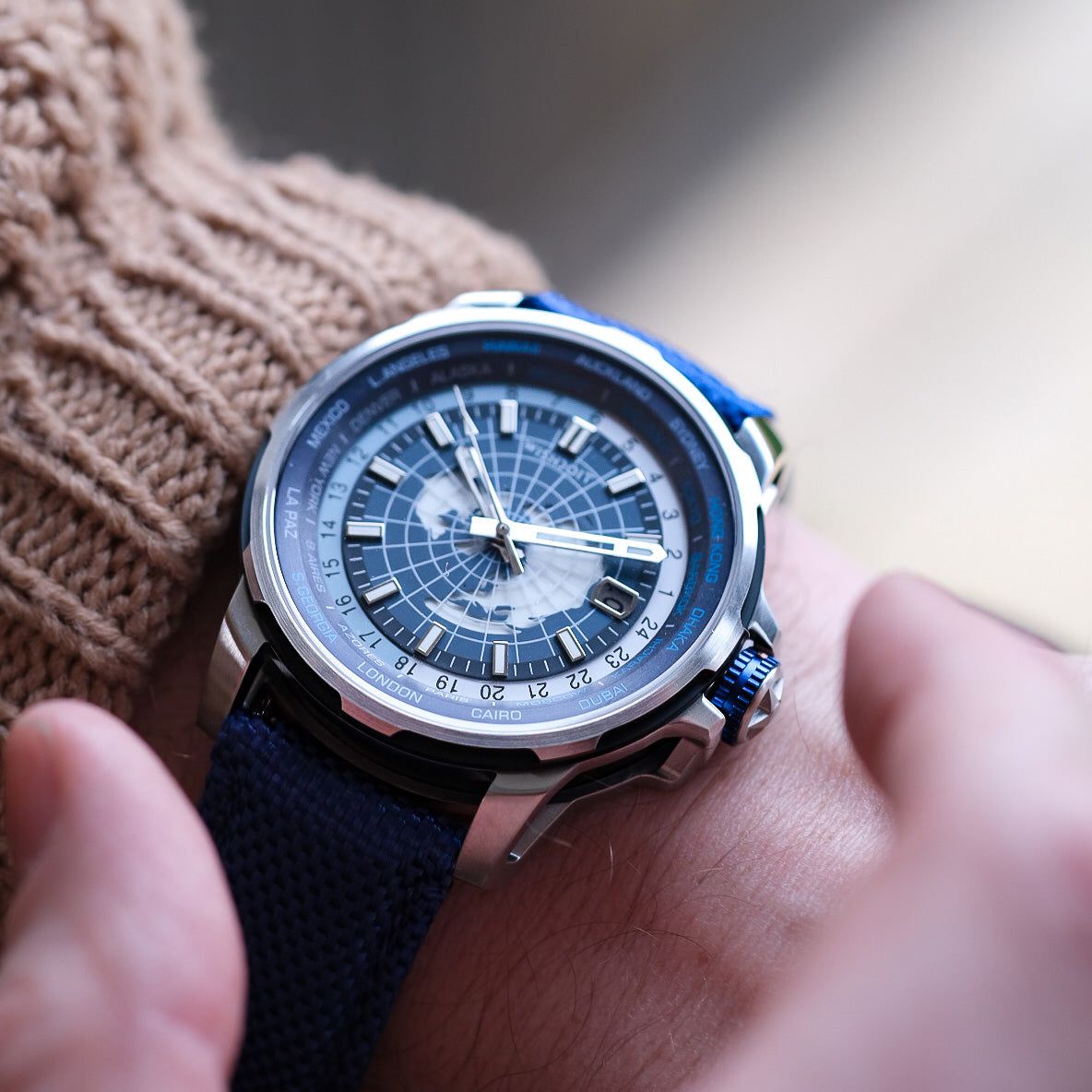


You did the responsible thing. The second hand started moving erratically—maybe jumping in four-second intervals—so you replaced the battery. Fresh cell, clean contacts, careful reassembly. You press the crown, wait for that satisfying first tick. Nothing. Still dead.
This scenario frustrates even experienced watch owners. But it's not uncommon. A new battery alone doesn't guarantee a running watch. Several other issues can keep a quartz movement silent, even with full power available.
Let's diagnose what might be wrong.
The Battery Contact Problem
This is the most common culprit after a battery change. The tiny metal tabs that touch the battery's positive and negative surfaces must make firm, clean contact. If a contact got bent during the battery swap, or if corrosion sits on the contact surface, power won't flow.
Quick check: Remove the battery again. Inspect the contacts. Are they clean? Do they press firmly against the battery when the case back is secured? A gentle cleaning with a contact cleaner or pencil eraser often solves this.

The Insulation Tab Trap
Many quartz movements use a small plastic or paper insulation tab that sits between the battery and the contact. This tab is removed when the watch is first sold. But if you're replacing the battery in a watch that previously ran, you shouldn't need a tab.
However, some movement designs require specific battery orientation or have separate insulation for different circuit paths. If you accidentally introduced an insulation tab where none belongs, or removed one that should remain, the circuit stays open.
Corrosion from a Leaked Battery
Here's the hidden damage. The old battery you removed might have leaked—even slightly—without visible signs. Battery acid corrodes the circuit board and contacts. You might not see the damage without magnification. A thin film of corrosion can block electrical flow entirely.
The fix: This often requires professional cleaning. The watchmaker will disassemble the movement, clean the circuit board and contacts with specialized solutions, and reassemble. In severe cases, the entire movement may need replacement.
The Motor Stalled
Quartz watches use a tiny stepper motor to advance the gear train. This motor can stall. Sometimes a mechanical blockage—a loose particle, a bent gear tooth—prevents movement. Sometimes the motor itself fails.
The sign: You might hear a faint clicking or buzzing when you insert the battery. That's the motor trying to move but failing. No sound at all suggests an electrical issue.

The Coil Is Fried
The coil is the most delicate component in a quartz movement. It's a winding of hair-thin copper wire. A sudden electrical surge—perhaps from inserting the battery incorrectly or using the wrong battery type—can burn out the coil.
Reality check: A burned coil means the movement is effectively dead. Replacement movements are often cheaper than coil repair. For many affordable quartz watches, swapping the entire movement is the economical solution.
The Gear Train Jam
Quartz movements still have gears. Those gears can jam. A broken pivot, a displaced jewel, or a piece of debris can lock the train. The motor tries to advance, but nothing moves.
The symptom: You might see the second hand twitch slightly when you insert the battery, then nothing. That twitch is the motor attempting to turn against a jammed gear train.
The Hands Are Stuck
Sometimes the movement is fine. The hands are the problem. If the hour and minute hands are pressed too tightly together, or if a hand touches the crystal or dial, friction stops everything.
Quick test: Remove the hands (requires professional tools) and test the movement without them. If it runs, the hands need reinstallation with proper clearance.
The Crown or Stem Issue
On watches with pull-out crowns, the stem mechanism includes a small contact that detects when the crown is pulled to the time-setting position. If this contact is stuck or misaligned, the movement may think the crown is permanently pulled out—and stop running to save power.
What to try: Pull the crown to the time-setting position, then push it firmly back in. Repeat several times. Sometimes this reseats the contact.
When to Call a Professional
If you've tried the simple checks—cleaning contacts, reseating the battery, cycling the crown—and the watch remains dead, it's time for professional help.
A watchmaker will:
-
Test the battery under load (not just voltage)
-
Inspect the movement under magnification
-
Clean the circuit and contacts properly
-
Test the coil and motor
-
Advise whether repair or replacement makes more sense
The Wishdoit Perspective
For owners of Wishdoit watches—or any quality quartz timepiece—the good news is that movements are standardized and replaceable. A common quartz caliber like the Ronda 515 or Miyota 0S series can be swapped for a modest cost. This is by design. Quartz movements are treated as serviceable modules, not permanent fixtures.
If your Wishdoit watch has stopped even with a fresh battery, a qualified watchmaker can quickly diagnose whether cleaning, repair, or replacement is the right path. And because these movements are widely available, the solution is rarely expensive.
Prevention for Next Time
-
Replace batteries promptly. A dead battery left in a watch is the leading cause of corrosion damage.
-
Use the correct battery. Check the movement specification. Wrong voltage can damage circuits.
-
Handle contacts carefully. Don't bend the tiny tabs during replacement.
-
Consider professional replacement. For valuable watches, the small service fee is cheap insurance against accidental damage.
The Bottom Line
A new battery is the first step in reviving a dead quartz watch, but not the only step. Contacts corrode. Coils burn. Motors stall. Gears jam. The movement is a complete electrical and mechanical system—any part can fail.
The good news is that most issues are fixable. And for common movements, replacement is often cheaper than repair. Your dead quartz watch likely has plenty of life left. It just needs the right diagnosis.
Because a watch that won't tick isn't necessarily dead. It's just waiting for someone who knows where to look.
You'll also like
Round or Tonneau? A Stylish Look at Different Watch Case Shapes
Why a 150-meter Dive Watch is the One You Really Need
THE VALUE PROPOSITION: The Pirates Urca Gold That Had Everyone God With Envy