
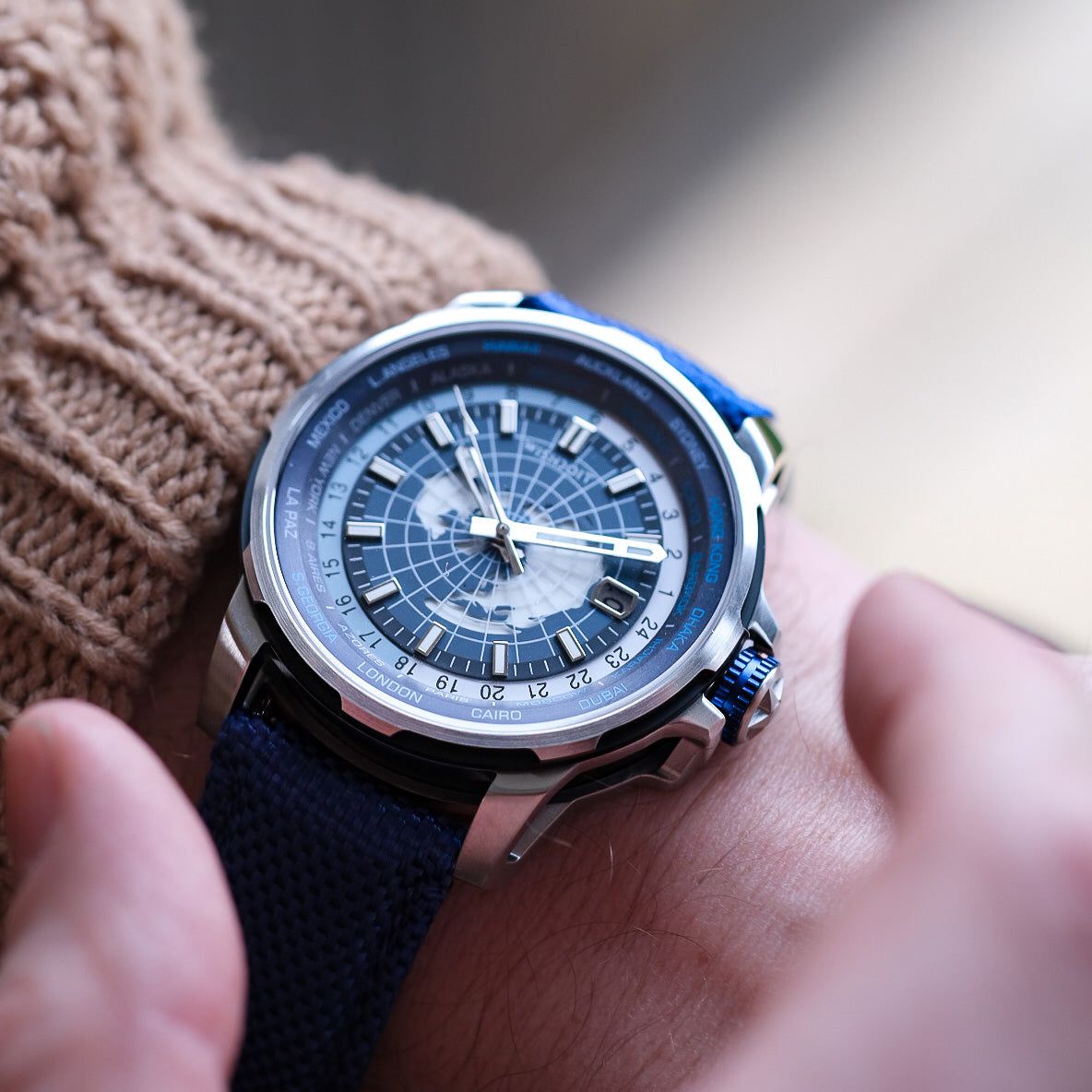


You glance at your wrist. The seconds hand is racing. Yesterday, your watch kept perfect time. Today, it's gained minutes. Nothing happened—no drop, no bump, no water exposure. Yet something is clearly wrong.
The most likely culprit? Magnetism.
Your smartphone, laptop, tablet case, or even a magnetic purse clasp could have exposed your mechanical watch to a field strong enough to affect its hairspring. The good news? Magnetization is common, reversible, and usually free to fix. Here are three telltale signs that your watch has been magnetized.

Sign 1: Sudden, Unexplained Time Gain
This is the classic symptom. A magnetized hairspring causes its coils to stick together. When coils stick, the effective length of the spring shortens. A shorter spring oscillates faster. A faster oscillation makes the watch run fast.
What to look for: Your watch was keeping reasonable time—perhaps gaining or losing a few seconds per day. Then, suddenly, it's gaining minutes. Not seconds. Minutes. A watch that's magnetized can gain 30 seconds, one minute, even several minutes per day.
What it's not: Gradual time loss or gain over months suggests normal aging or lubrication issues. Sudden, dramatic time gain suggests magnetization.
Sign 2: Erratic Performance in Different Positions
A magnetized hairspring doesn't behave consistently. The way the coils stick can change depending on the watch's orientation.
What to look for: Your watch runs differently depending on how you place it. Dial up, it gains 20 seconds per day. Crown down, it gains 2 minutes. On its side, it runs almost accurately. This positional inconsistency is a red flag.
Test it: Note your watch's rate overnight in one position (dial up). The next night, try a different position (crown down). If the rates vary wildly, magnetism is likely.
Sign 3: Fast Running After Exposure to Electronics
This sign is circumstantial but compelling. You recently placed your watch near something magnetic—and now it's running fast.
Common magnetic sources:
-
Smartphones (especially while charging)
-
Laptop speakers (the left side of most laptops)
-
Tablet cases with magnetic sleep/wake covers
-
Magnetic clasps on bags or bracelets
-
Wireless earbud charging cases
-
Refrigerator door seals (if you store watches in the kitchen)
What to look for: You remember setting your watch on your phone overnight. Or resting your wrist on your laptop while typing. Or using a magnetic phone mount in your car. Soon after, the watch started gaining time.
Circumstantial? Yes. But strong evidence nonetheless.

What Magnetization Is Not
Before concluding magnetism, rule out other possibilities:
-
Dead battery in a quartz watch: Quartz watches don't magnetize easily. If a quartz watch runs fast, the battery is likely dying or the movement is failing.
-
Impact damage: A dropped watch can run fast or slow depending on what broke. Magnetization doesn't follow a drop.
-
Needs service: Gradual time loss (not gain) over years suggests dried lubricants, not magnetism.
The Quick Test: Compass Method
If you want confirmation before visiting a watchmaker, try the compass test.
What you need: A simple magnetic compass (hiking or orienteering type).
The process: Place the compass on a flat surface away from electronics. Let the needle settle. Slowly bring your watch near the compass. If the needle deflects noticeably as the watch approaches, you have magnetization.
Limitation: This test can produce false negatives if the magnetization is mild. A watch can be magnetized and still not move a compass needle strongly.
The Fix: Demagnetization
Here's the best part. Fixing a magnetized watch takes seconds. A watchmaker places your watch on a demagnetizer (a simple electronic device), presses a button, and slowly moves the watch through the field. The process neutralizes the magnetic charge in the hairspring and other steel components.
Cost: Often free at local watch shops. Sometimes a nominal fee ($5-10). Rarely more.
Time: Less than one minute.
Afterward: Your watch returns to its previous accuracy immediately. No further steps required.
Prevention for the Future
Once demagnetized, your watch is vulnerable again. Simple habits reduce risk:
-
Store watches away from smartphones, especially while charging
-
Be mindful of laptop speaker locations when typing
-
Check bags and accessories for magnetic clasps
-
Consider a watch winder placed away from electronics
For Wishdoit watches and any quality mechanical timepiece, awareness is the best protection. You don't need to fear magnets. You just need to respect them.
The Wishdoit Perspective
Wishdoit watches use reliable automatic movements—often the Seiko NH35 or Miyota calibers. These movements are robust but not immune to magnetization. Like any mechanical watch with a steel hairspring, they can fall victim to everyday magnetic fields.
When to See a Watchmaker
If your watch shows these signs, visit a watchmaker. Even if the problem isn't magnetism, a professional can diagnose the actual cause. If it is magnetism, you'll walk out with an accurate watch again.
Don't live with a watch running wild. The fix is too easy.
Because a watch that runs fast isn't keeping you ahead of time. It's telling you something needs attention.
You'll also like
Become a Watch Pro Overnight: 10 Insider Secrets Everyone Should Know
Do you know the functions and usage of the three subdials on a watch?
The Abyss Voyager GMT Diving Watch: Designed for Exploring the Depths of Life