
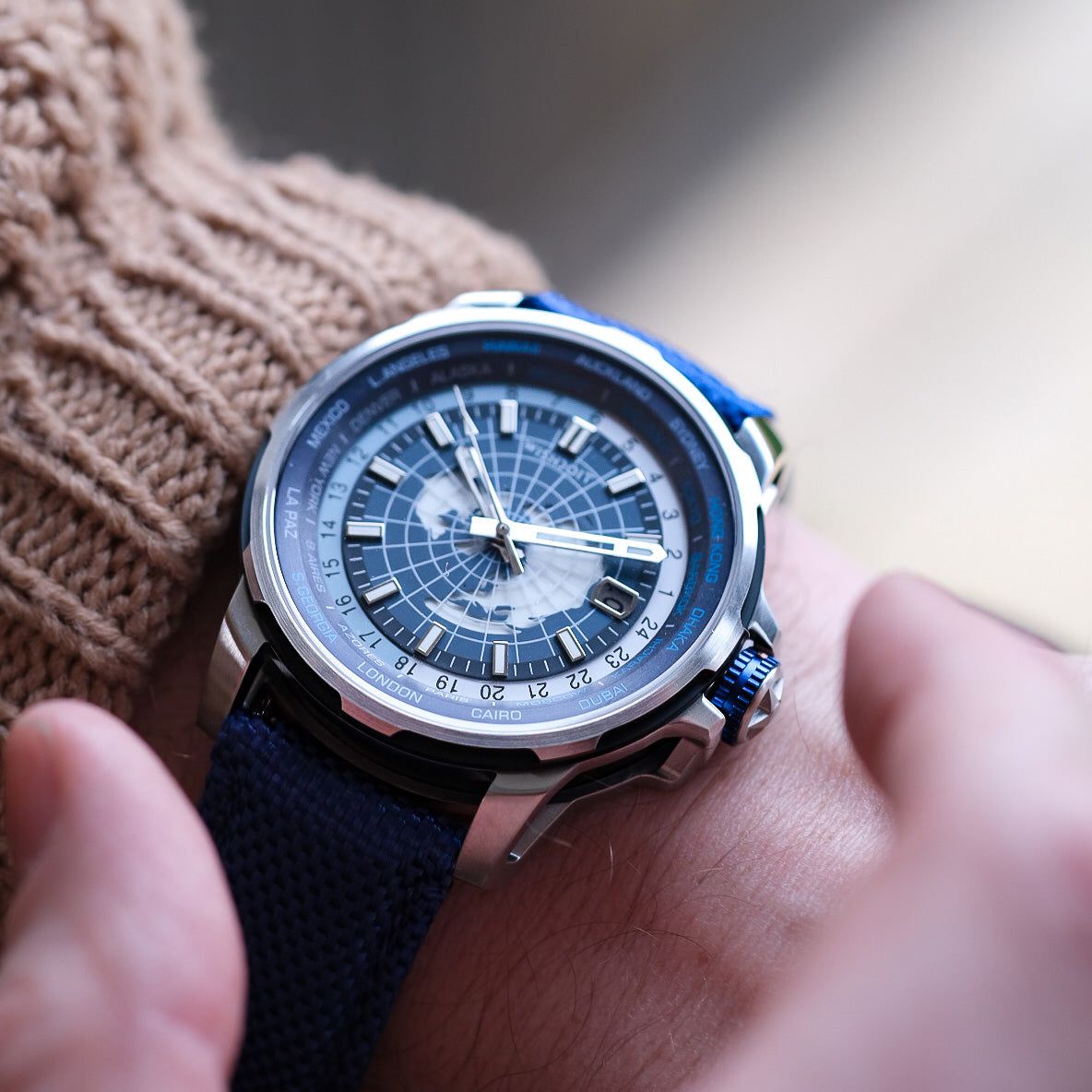


Quick answer: Fog under the crystal means moisture is inside the case. Move the watch away from heat, stop operating the crown or pushers, dry the exterior and arrange prompt inspection. Household heat, rice and opening the case can worsen damage or compromise evidence for warranty service.
Key takeaways
- Condensation can corrode the movement even after the crystal appears clear.
- A technician should inspect gaskets, dry the movement and pressure-test the case.
- Water-resistance ratings depend on intact seals and correct crown use; they are not permanent.
You glance at your wrist and notice it: a thin fog beneath the crystal. Maybe it's a mist across the dial. Maybe it's tiny droplets clinging to the inside of the glass. Your first thought might be, "It's just a little condensation—it'll clear up."
That assumption could cost you a movement.
Fog inside a watch is never normal. It's never harmless. And it's almost always a warning sign of a larger problem that requires immediate attention.
What Fog Actually Means
Fog forms when moisture inside the watch case condenses on the crystal. For moisture to be inside, your watch's water-resistant seals have failed in some way. The watch case should be a sealed environment. If humidity can get in, so can contaminants, dust, and eventually, enough water to cause catastrophic damage.
Key Point: Fog doesn't appear from nowhere. It appears because the protective barriers designed to keep your watch dry have been compromised.

The Damage Happens Even If the Fog Clears
Here's the dangerous misconception: "The fog disappeared, so my watch is fine."
When fog clears, the moisture hasn't left the watch. It has simply evaporated back into the air inside the case. That moisture is now settling on:
-
The movement's steel components (rust)
-
The delicate hairspring (corrosion)
-
The gear train pivots (accelerated wear)
-
The dial and hands (permanent spotting)
Even a single episode of fog can initiate corrosion that continues long after the crystal looks clear again.
Common Causes of Seal Failure
Why did moisture get inside in the first place? Several possibilities:
Crown Left Unscrewed: On dive-style watches with screw-down crowns, forgetting to secure the crown is the most common cause. Water enters through the crown tube during hand washing or swimming.
Degraded Gaskets: The rubber or silicone gaskets that seal the case back, crown, and crystal degrade over time. Heat, sweat, and age all accelerate this process.
Impact Damage: A knock that doesn't crack the crystal can still misalign the case or damage a seal.
Temperature Extremes: Moving repeatedly between hot and cold environments can cause seals to contract and expand, eventually compromising their integrity.
Battery Changes: Improperly resealing a quartz watch after a battery replacement is a frequent cause of later moisture intrusion.

What to Do Immediately
If you see fog inside your watch, follow these steps:
First, stop using the watch. Do not wear it. Do not try to "dry it out" with a hairdryer or sunlight. Heat can damage seals further and drive moisture deeper into the movement.
Second, pull out the crown. If the watch has a screw-down crown, unscrew it and pull it to the time-setting position. This opens a passage for moisture to escape rather than remaining trapped.
Third, get it to a watchmaker. Explain what you saw. A professional will open the case, inspect for damage, and perform a proper drying procedure. For quartz watches, this often includes cleaning the circuit contacts. For mechanical watches, it may require a full movement cleaning.
The Quartz vs. Mechanical Difference
Quartz movements are more vulnerable to moisture damage because their electronic circuits can short or corrode. A small amount of moisture can destroy a quartz movement entirely.
Mechanical movements are more resilient to brief exposure but still vulnerable to long-term corrosion. Rust on pivots and gears creates friction that destroys accuracy and eventually stops the watch entirely.
Either way, ignoring fog is a gamble with poor odds.
Prevention: Better Than Cure
Protecting your watch from fog is straightforward:
-
Check your crown before water exposure. Always ensure screw-down crowns are fully tightened.
-
Have gaskets checked annually. A simple pressure test at a watchmaker costs little and reveals seal condition.
-
Avoid extreme temperature swings. Don't wear your watch in a hot shower or sauna. Don't move it rapidly from air conditioning to outdoor heat.
-
Service regularly. During routine service, have all gaskets replaced. They're inexpensive components that protect an expensive movement.
A Note on "Water-Resistant" Ratings
Your watch might be rated for 50M, 100M, or 200M. Those ratings assume:
-
All seals are intact and properly installed
-
The crown is fully secured
-
Gaskets are within their service life
A 200M watch with a dried-out gasket or an unsealed crown is not water-resistant at all. The rating is a statement of potential, not a guarantee forever.
The Wishdoit Perspective
Wishdoit watches are built with attention to sealing and water resistance. Like any quality timepiece, they include multiple gaskets, screw-down crowns on dive models, and robust case construction. But no watch is immune to seal degradation or user error.
The brand's commitment to accessible serviceability means that when fog does occur—whether through neglect or accident—repair is straightforward. Parts are available, movements are serviceable, and a qualified watchmaker can restore your watch to full function.
But the best repair is the one you never need. Prevention remains the owner's responsibility.
Final Thought
Fog inside your watch is never "just condensation." It's evidence of seal failure. It's a warning that moisture has breached your watch's defenses. And it's a call to action.
Every day you delay, corrosion advances. Every time the fog clears and you ignore it, you're accepting damage that could have been prevented.
Don't wait for the watch to stop. Don't assume it will dry out on its own. See fog? See a watchmaker.
Because the watch you save might be the one you planned to wear for decades.
You'll also like
Stay Connected Across Time Zones: How a World Time Watch Keeps You in Sync?
The Sophisticated Gentleman's Guide to Pairing Mechanical Watches with Formal Attire
Which table mirror material is good,mineral crystal glass or sapphire crystal glass ?
Explore related watches and guides
Reviewed by the WISHDOIT Editorial Team. Technical claims are checked against available manufacturer documentation and watch-level specifications. Read our Editorial Policy. Last updated July 8, 2026.