
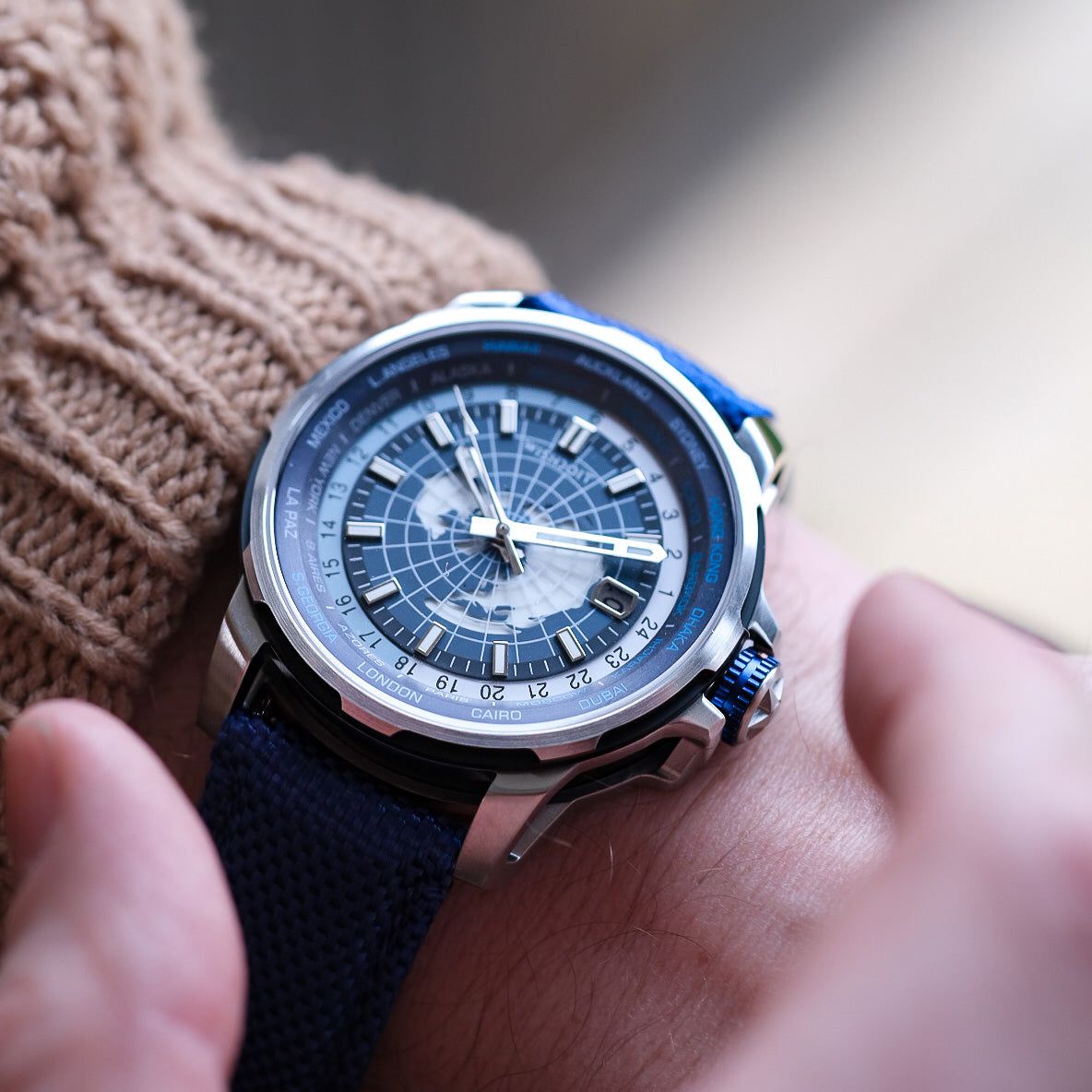


You finally bought your first mechanical watch. Maybe it was a Seiko, a microbrand, or perhaps a wishdoit watch with that gorgeous automatic movement you can see through the display case back. You feel proud. You feel like a real watch enthusiast. But here is the uncomfortable truth: owning a mechanical watch is not the same as caring for one. Small, everyday habits that seem harmless are actually shortening your watch's lifespan, harming its accuracy, or slowly damaging delicate components. The worst part? Most owners never realize they are making these mistakes until something breaks. Let me save you that expensive repair bill. Here are seven common mechanical watch mistakes you probably did not know you were making.
Mistake #1: Setting the date between 9 PM and 3 AM.
This is the number one killer of mechanical watch movements, and yet almost nobody talks about it. Inside your watch, the date-change mechanism engages several hours before and after midnight. If you manually adjust the date during this window—typically 9 PM to 3 AM—you can strip the delicate gears that turn the date wheel. The result? A crooked date, a stuck date, or a complete failure. The fix is simple: first, pull the crown to the time-setting position and move the hands to 6:30 AM or PM. Then set the date. Then set the correct time. This applies to every mechanical watch, including every wishdoit watch with a date complication. Learn this rule. Live by this rule. Your movement will thank you.
Mistake #2: Winding your automatic watch every single day.
Here is a surprising one. Many new owners think they need to wind their automatic watch every morning like a old-fashioned manual watch. Stop. Automatic watches have a clutch system that can be overwound if you keep cranking the crown after the mainspring is already tight. With most modern automatics, including wishdoit watches, you only need to give it about 20-30 turns to get it started if it has completely stopped. After that, your wrist movement keeps it running. Winding it fully every day puts unnecessary stress on the winding mechanism. Trust the rotor. Let your arm do the work.

Mistake #3: Ignoring magnetism from everyday objects.
Your mechanical watch is a tiny piece of metal springs and gears. Magnets are its natural enemy. And your modern life is full of magnets: laptop speakers, chargers, tablet cases, microwave ovens, and even some handbag clasps. When your watch gets magnetized, it can run wildly fast—sometimes gaining minutes or even hours per day. The scary part? You will not notice until you check the time against your phone and realize something is wrong. Demagnetizers are cheap (under $15 on Amazon), and most watchmakers will do it for free. If your wishdoit watch suddenly starts racing, do not panic. Demagnetize it first before assuming something is broken.
Mistake #4: Changing the time backward instead of forward.
You are rushing to set your watch before a meeting. It is five minutes fast. You think, "I will just turn the crown backward a few minutes." Stop right there. Many mechanical movements are designed to have the time set by moving the hands forward. Moving them backward, especially past midnight or during the date-change window, can strain the gear train. The safe habit is always to move the hands forward, even if that means going around the full 12-hour cycle. With a wishdoit watch or any other automatic, forward is your friend. Backward is borrowing trouble.
Mistake #5: Wearing your nice watch for sports or heavy vibration.
You love your mechanical watch. You want to wear it everywhere. That is admirable, but also potentially expensive. Mechanical movements hate repeated shock and vibration. Golf swings, tennis serves, running with heavy foot strikes, using a jackhammer—these activities can knock the balance staff out of alignment or damage the shock protection system. A wishdoit watch is built with solid materials, but it is not a G-Shock. If you are heading to the gym, the tennis court, or a DIY project involving power tools, switch to a quartz beater. Your mechanical movement will last decades longer if you respect its limits.
Mistake #6: Storing your watch flat or on a cheap winder.
How do you put your watch down at night? Most people just lay it flat on a dresser. That is fine, but there is a better way. Storing a mechanical watch vertically (on its side, crown up) or dial-up both put different amounts of friction on the balance wheel. Some positions actually improve accuracy overnight. Experiment to see which position makes your watch run closest to perfect time. The bigger mistake? Cheap, non-programmable watch winders. A low-quality winder that spins constantly can over-wind or magnetize your watch. If you use a winder for your wishdoit watches, invest in one that allows you to set turns per day (like 650 TPD, not endless spinning). Otherwise, just let your watch rest. It is fine to stop.

Mistake #7: Assuming water resistance means waterproof.
Here is the most dangerous mistake of all. Your watch says "50m water resistant" or "100m water resistant." That sounds impressive. But in the watch industry, those numbers are measured in a lab under perfect, static conditions. 50m means splash resistant—fine for hand washing and rain, not for swimming. 100m means light swimming, not diving. 200m is what you need for real snorkeling or diving. Never, ever press buttons or operate the crown underwater, even on a dive watch. And always have the gaskets checked every 2-3 years. A wishdoit watch with 50m or 100m rating is perfect for daily life, but do not take it into a pool or hot shower. Steam and chlorine are deadly for gaskets. When in doubt, treat your mechanical watch like the precision instrument it is, not a submarine.
Bonus tip: Service your watch before it breaks.
Most owners wait until their watch stops running or starts losing minutes per day. That is like waiting for your car engine to seize before changing the oil. Mechanical watches need lubrication every 3-5 years. The oils dry out, turn gummy, and then metal grinds against metal. A service on an affordable watch like a wishdoit watch might cost more than the watch itself—which is why many people skip it. Fair enough. But at least know that you are making a choice. If you love your watch and want it to last a lifetime, budget for service. If it is a budget-friendly piece, enjoy it for 5-7 years and replace the movement when needed. Just do not expect it to run perfectly for twenty years without help.
Final thought: Small habits, big differences.
None of these mistakes make you a bad watch owner. We all learned by doing—and sometimes by breaking things. But now you know the seven most common mechanical watch mistakes, you can avoid them effortlessly. Your wishdoit watch or any automatic in your collection will run better, last longer, and keep you smiling every time you glance at your wrist. The best watch is not just the one you buy. It is the one you care for properly. Start tonight. Check how you set your watch down. And tomorrow morning, wind it just once—gently, correctly, and with confidence.
You'll also like
The Abyss Voyager GMT Diving Watch: Designed for Exploring the Depths of Life
The Future of Timekeeping: 2025’s Most Innovative Watch Designs
Affordable Luxury: Best Mid-Range Watches to Own in 2025