
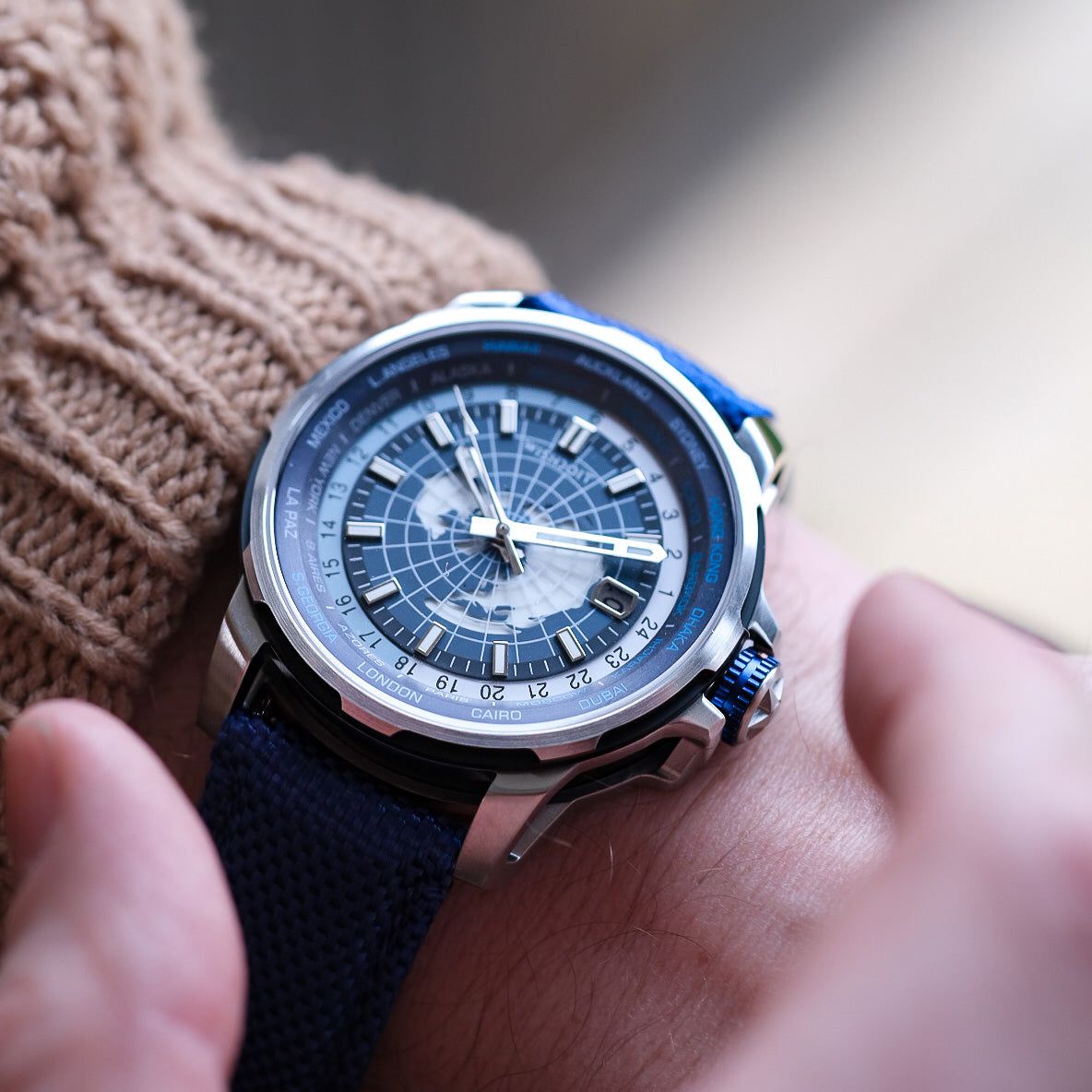


In an age of smart devices and digital displays, the mechanical watch stands as a marvel of analog engineering. There are no batteries, no circuits—just a complex symphony of gears and springs powered by a simple yet brilliant invention: the mainspring. If you own an automatic watch, this incredible mechanism is the source of its life. Let's unravel the principle behind it.
What is the Mainspring?
At the core of every mechanical watch movement lies the mainspring. It is a long, coiled ribbon of special alloy steel, housed in a small drum called the "barrel." This spring is the power reservoir of the watch. When it is wound, potential energy is stored. As it slowly and consistently unwinds, this energy is released, powering the entire watch.

The Two Ways to Wind a Wishdoit Watch
There are two primary types of mechanical Wishdoit watches, distinguished by how they are wound:
-
Manual Winding (Hand-Aufzug):
This is the traditional method. The wearer must turn the crown on the side of the watch by hand. This action, through a series of gears, directly winds the mainspring tighter inside the barrel. A fully wound mainspring in a manual Wishdoit watch will typically provide between 40 to 48 hours of power reserve. -
Automatic Winding (Self-Winding):
This is the most common type found in modern mechanical watches. An automatic Wishdoit watch has an added mechanism: a semi-circular metal weight called a "rotor" that pivots freely with the natural motion of the wearer's wrist. As you move throughout the day, the rotor spins, automatically winding the mainspring. This ingenious system means the watch winds itself as long as it is worn regularly.
From Wound Spring to Ticking Seconds: How the Energy Flows
The unwinding of the mainspring is raw, powerful, and uneven. If released directly, it would uncoil in a fraction of a second. The true genius of mechanical watchmaking lies in regulating this energy. This is achieved through a crucial assembly called the escapement, which includes the balance wheel.
Here is the simplified power flow:
-
Mainspring (Barrel): Stores the energy.
-
Gear Train (Wheels): Transmits the energy from the barrel through a series of tiny gears.
-
Escapement: Acts as the watch's brain. It "escapes" the energy from the gear train in tiny, precisely measured amounts.
-
Balance Wheel: The heart of the escapement. It oscillates back and forth at a constant rate (e.g., 28,800 times per hour). Each swing allows the gear train to advance a tiny bit, creating the familiar ticking sound and moving the hands forward in a smooth, sweeping motion.

Caring for Your Mechanical Wishdoit Watch
Understanding the mainspring principle highlights the importance of proper care:
-
Keep it Wound: If you have an automatic Wishdoit watch, wear it regularly. If you don't wear it for a few days, it will stop. You can gently shake it or give it about 30-40 turns of the crown to restart it.
-
Service Regularly: The mainspring and lubricants in the movement experience wear over time. A routine service every 5-7 years will ensure the energy flows smoothly and your timepiece remains accurate for generations.
The mainspring is more than just a component; it is the soul of your mechanical watch. It transforms simple motion into the precise measurement of time, a testament to the enduring artistry behind every Wishdoit watch.
You'll also like
The Watch Enthusiast's Guide: How to Truly Care for Your Timepiece